
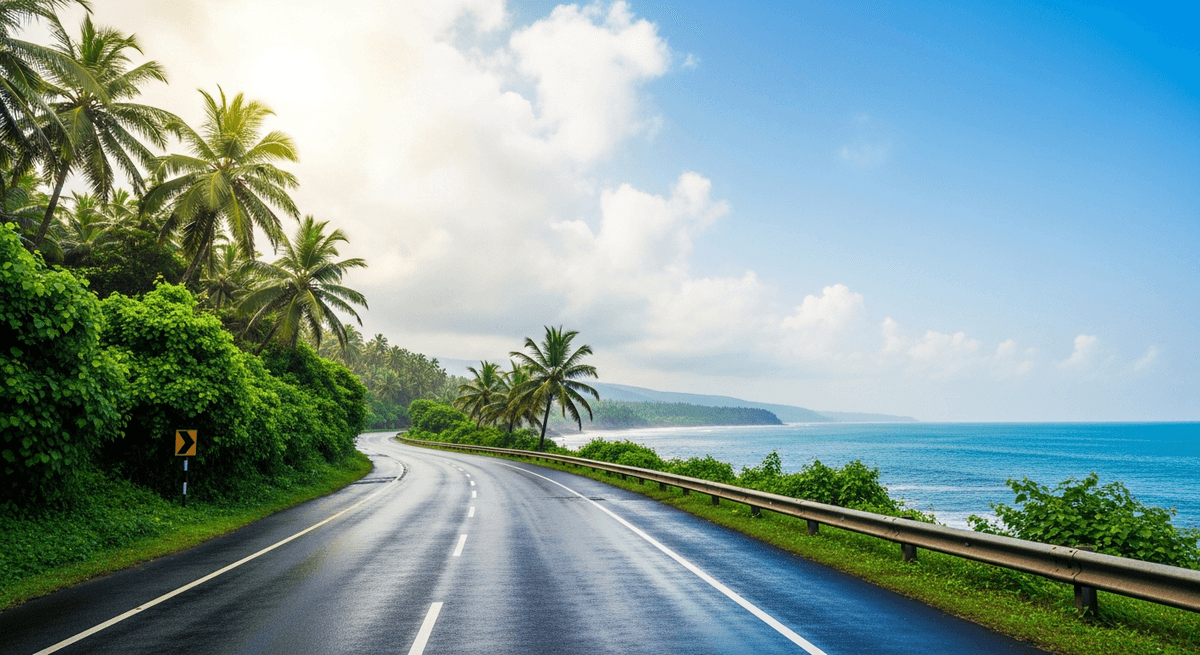

The drive from Mumbai to Goa is one of those journeys that begins with the very best of intentions, a full tank of petrol, a carefully curated playlist, and the sort of optimism that can only belong to someone who has never previously attempted to navigate the NH66 on a long weekend when, by some mysterious alignment of public holidays and collective human ambition, the entire population of Maharashtra has simultaneously decided that Goa was a splendid idea. Like a gentleman's club member attempting to order champagne at closing time, the enterprise does not always proceed according to plan. Yet when executed with proper timing and a healthy respect for the Konkan Coast's particular brand of coastal magic, this 600 kilometre journey transforms from mere transportation into something approaching pilgrimage.
The Mumbai to Goa road trip follows the legendary NH66, that ribbon of tarmac that hugs India's western coastline like a devoted suitor, weaving through fishing villages that time forgot and beaches that Instagram has not yet discovered. This is the old Mumbai Goa Highway that traces the Konkan Coast through Maharashtra and into Goa proper, passing scenery so consistently beautiful that even the most jaded Mumbai executive finds himself pulling over to photograph palm trees like a tourist who has just discovered the concept of sand. The route demands respect, rewards patience, and occasionally requires the sort of philosophical acceptance that comes naturally to those who understand that the best journeys are measured not in hours saved but in memories collected.
The Route Overview
The Mumbai to Goa drive covers approximately 600 kilometres via the coastal NH66, a journey that typically requires 10 to 12 hours of driving time under normal circumstances, though "normal" is a relative concept when applied to Indian highways during peak season. The route begins with an escape from Mumbai's gravitational pull via the Bandra Worli Sea Link, proceeds south through the Konkan heartland of Maharashtra, and concludes with Goa's welcoming embrace at the state border near Sawantwadi.
The optimal timing for this coastal maharashtra road trip runs from October through March, when the monsoons have retreated like a house guest who has finally taken the hint, leaving behind roads that are passable and views that are crystalline. The monsoon season from June to September offers its own dramatic appeal, with waterfalls that materialize from nowhere and a green so intense it appears to have been painted by an artist with a serious commitment to the color palette, though it requires drivers possessed of either exceptional skill or exceptional foolhardiness.
The wise traveler departs Mumbai before dawn on weekdays, avoiding Friday evenings and public holidays with the same careful attention one might apply to dodging a particularly determined street vendor. The early departure serves multiple purposes: cooler temperatures, lighter traffic, and the ineffable satisfaction of watching the sun rise over the Arabian Sea while lesser mortals are still negotiating with their alarm clocks.
Alibaug: The Coastal Awakening
Alibaug arrives 95 kilometres south of Mumbai like a revelation wrapped in sea breeze, the first proper indication that the Konkan Coast means business. This former Portuguese trading post has evolved into something of a weekend refuge for Mumbai's more discerning escapees, yet it retains the unhurried dignity of a place that has never felt compelled to reinvent itself for tourist approval. The town's beaches stretch in gentle crescents, backed by casuarina groves that whisper secrets in the coastal wind.
The Kolaba Fort, accessible during low tide via a causeway that appears and disappears with the rhythm of the ocean, offers the sort of maritime adventure that makes grown adults feel like amateur explorers. Built in 1662 by the Maratha admiral Kanhoji Angre, the fort sits in Alibaug bay like a stone ship permanently anchored to the seabed, its walls still sturdy enough to support tourists and their ambitious photography projects.
For sustenance, the local Konkani cuisine reveals itself in establishments like Sanman Restaurant, where the koliwada prawns arrive crispy as autumn leaves and twice as satisfying. The solkadhi, that pink drink made from kokum and coconut milk, serves as both refreshment and gentle introduction to the culinary philosophy that governs this entire coastline. Alibaug functions as the first checkpoint in the journey's transformation from urban escape to coastal immersion, and it performs this role with considerable grace.
Murud Janjira: The Unconquered Fort
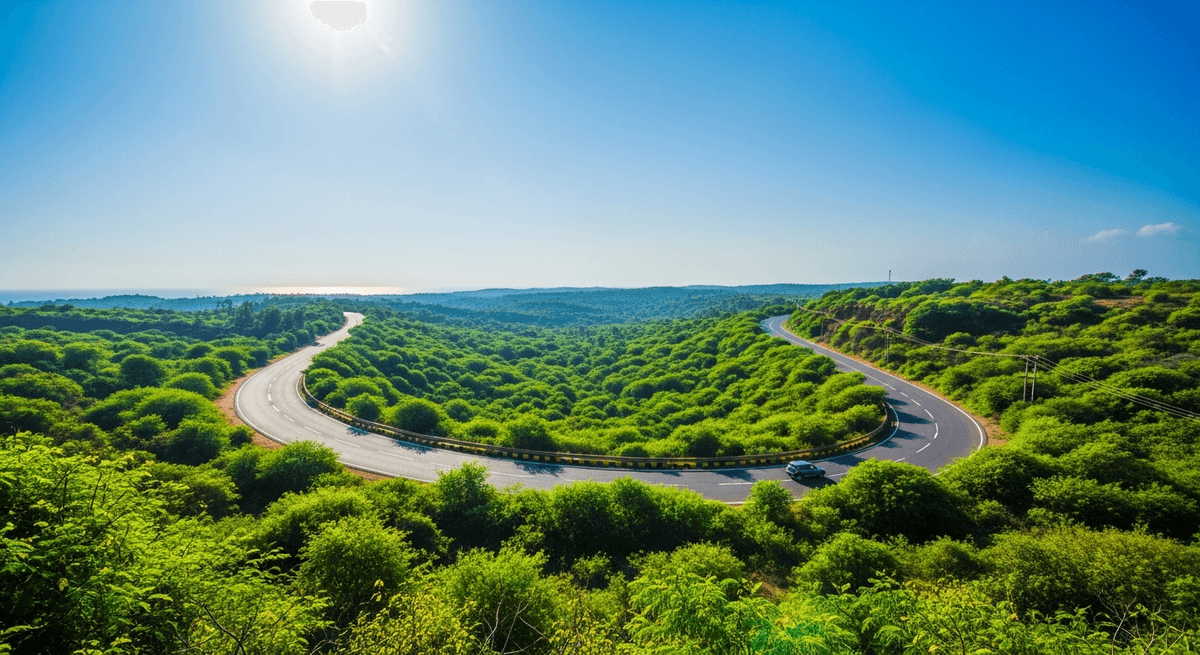
Fourteen kilometres beyond Alibaug lies Murud Janjira, home to what may be the most romantically situated fortress in all of India, a sea fort that rises from the waters of Murud Bay like something from an adventure novel written by someone with excellent taste in dramatic settings. The Janjira Fort has the distinction of never having been conquered in its entire operational history, a record that speaks to both the strategic genius of its Siddhi builders and the natural advantages of constructing one's stronghold on an island surrounded by rather inhospitable waters.
Access to the fort requires a boat journey from Rajapuri jetty, where local fishermen operate ferries according to a schedule that can best be described as "when the boat is ready and the tide is cooperative." This informal approach to timing is not a flaw but rather an essential feature of the Konkan experience, where the concept of rigid schedules wilts like a delicate flower exposed to salt air. The fort itself reveals 22 rounded bastions, a freshwater lake that defies all logical explanation, and views that justify every minute spent waiting for the boat.
The Darbar Hotel near the jetty serves excellent fish curry with rice, prepared according to recipes that have been passed down through generations of families who understand that good food, like good fortresses, should be built to last. The sol kadhi here carries the authentic tartness that marks the real article, accompanied by fresh catch that was swimming in the Arabian Sea that very morning.
Ganpatipule: The Temple by the Sea
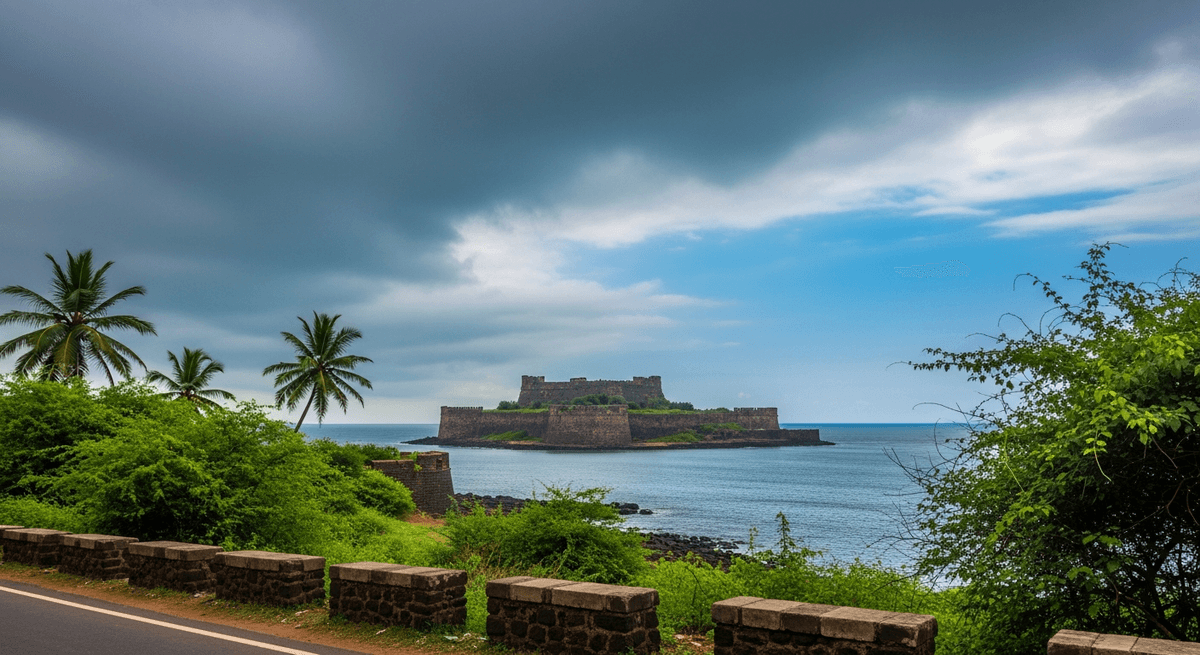
Ganpatipule emerges 375 kilometres into the journey like a spiritual oasis where the sacred and the scenic have reached a harmonious understanding. The town centers around the Swayambhu Ganpati Temple, where Lord Ganesha is said to have manifested naturally in the form of a rock that faces the sea, a geological miracle that even skeptics find oddly moving. The temple sits directly on the beach, allowing pilgrims to combine devotion with the sort of coastal views that inspire contemplation of the infinite.
The beach itself stretches in a perfect crescent, backed by hills covered in cashew plantations and coconut groves that provide natural air conditioning. The sand maintains that fine, golden quality that invites long walks and philosophical reflection, while the waves approach the shore with the gentle persistence of someone making a reasonable request. Unlike beaches that have been colonized by commercial tourism, Ganpatipule retains the peaceful atmosphere of a place where the primary entertainment consists of watching the sun set over the Arabian Sea while listening to temple bells carried on the evening breeze.
The MTDC resort offers comfortable accommodation with sea facing rooms and a restaurant that serves both Konkani specialties and adequate approximations of North Indian standards. The local alphonso mangoes, available during season, achieve a perfection that borders on the transcendent, while the coconut water comes direct from trees that have been perfecting their craft for decades. Ganpatipule functions as the spiritual heart of the Konkan Coast road trip, a place where even confirmed materialists find themselves pausing to appreciate something larger than themselves.
Plan this route with GPSSquad
AI powered itineraries, expense splitting, and group coordination in one app.
Start Planning FreeRatnagiri: The Mango Capital
Ratnagiri, 50 kilometres further south, announces itself as the undisputed capital of the Alphonso mango kingdom, a title it wears with the quiet confidence of a place that knows it has achieved perfection in at least one essential area of human endeavor. The town spreads along the Kajali River estuary like a comfortable guest who has found the perfect spot and decided to stay, surrounded by the laterite hills and mango orchards that provide both its beauty and its economic foundation.
The Ratnadurg Fort, built by the Bahmani Sultans and later fortified by the Marathas, crowns a hill overlooking the harbor with views that encompass both river and sea. The fort's strategic position controlled the coastal trade routes for centuries, and its walls still echo with the sort of maritime history that makes grown adults wish they had paid more attention during school lessons about the Maratha navy. The climb to the fort requires moderate effort but rewards visitors with panoramic views and the sort of afternoon breeze that makes philosophical reflection irresistible.
During mango season, April through June, Ratnagiri transforms into a fragrant paradise where the air itself seems edible. The local Alphonso mangoes achieve legendary status not through marketing but through the simple expedient of being absolutely perfect, with flesh so sweet and texture so creamy that first time tasters often experience something approaching religious conversion. The Hotel Landmark serves excellent Konkani thali with local fish preparations that showcase the region's mastery of coastal cuisine, while their mango kulfi provides a fitting conclusion to any meal taken during the blessed season.
Sawantwadi and the Goa Border: The Final Approach
Sawantwadi marks the final major stop in Maharashtra, a town that has earned modest fame for its wooden toys and lacquerware, crafts that local artisans pursue with the patient dedication of people who understand that true quality cannot be rushed. The town sits in a valley surrounded by the Western Ghats, with the Tillari River providing both scenic beauty and the water supply that keeps the surrounding landscape green throughout most of the year.
The Sawantwadi Palace, though now converted into a heritage hotel, retains enough of its royal dignity to impress visitors who appreciate architecture that was built to last several centuries. The palace gardens, maintained with the sort of attention to detail that suggests real affection for the work, provide a peaceful interlude before the final push into Goa. The local markets offer excellent examples of the region's woodcraft, including the famous Channapatna toys that have been bringing joy to children for generations.
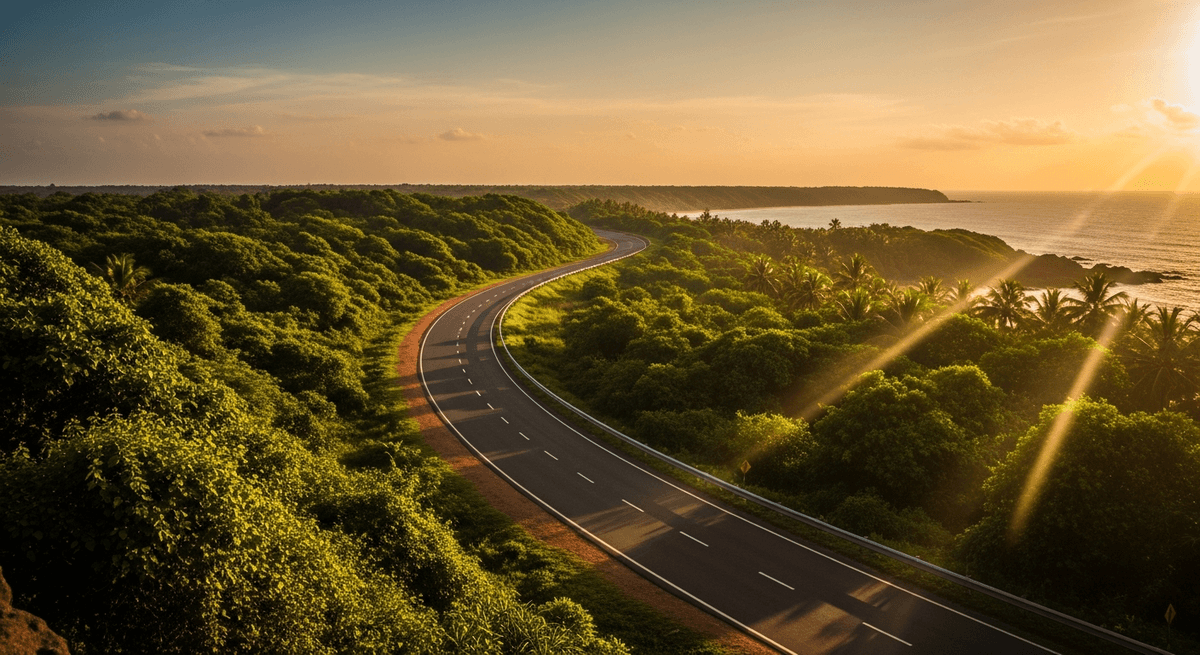
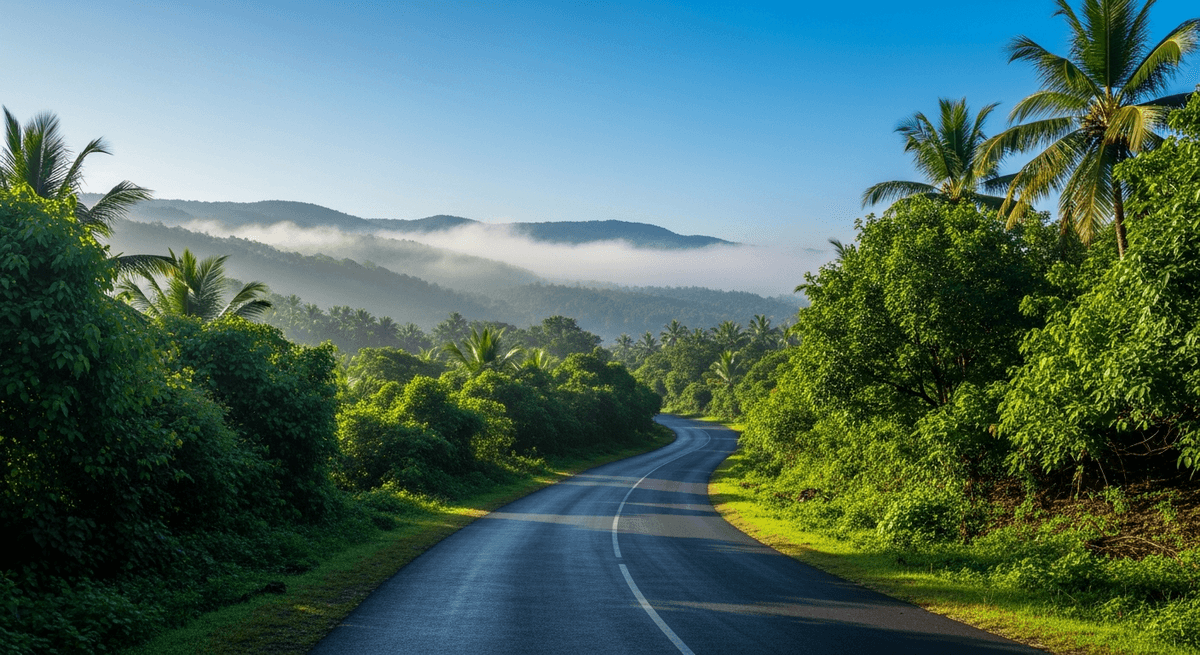
From Sawantwadi, the Goa border lies just 30 kilometres ahead, marked by a gradual thickening of palm trees and a subtle shift in the atmosphere that suggests arrival at a place that has made being pleasant a matter of civic policy. The crossing into Goa provides one of the more satisfying state border experiences in Indian road travel, where the change in landscape feels both dramatic and completely natural, like the final movement of a symphony that has been building toward this moment throughout the entire journey.
Practical Planning: Timing, Budget, and Essentials
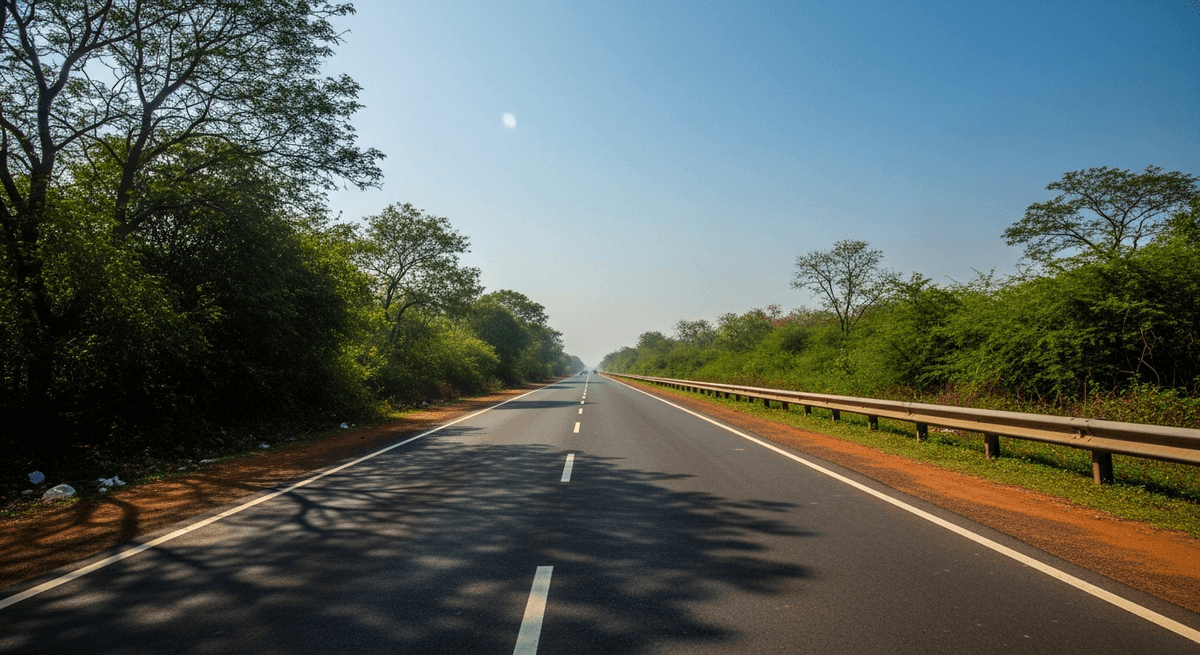
The Mumbai to Goa road trip rewards careful planning with the sort of generosity that well planned adventures typically display. The optimal departure time remains before 6 AM on weekdays, a schedule that allows travelers to avoid both Mumbai's notorious traffic and the afternoon heat that can make coastal driving less pleasant than it ought to be. Weekend departures, while not impossible, require the sort of patience typically associated with meditation practice, particularly during the tourist season when every car in Maharashtra appears to be heading south.
Budget considerations vary widely based on accommodation preferences and dining ambitions, but a reasonable estimate for two people covers fuel costs of approximately ₹6,000 to ₹8,000, accommodation ranging from ₹2,000 per night for decent beach resorts to ₹10,000 for luxury properties, and meals that can cost anywhere from ₹500 for excellent local thali to ₹3,000 for resort dining with sea views. The toll charges along NH66 add another ₹1,500 to ₹2,000 to the total, a price that most travelers consider reasonable for the privilege of using well maintained highways.
Essential packing includes sunscreen with serious SPF credentials, comfortable walking shoes that can handle both temple visits and beach walks, light cotton clothing that breathes in humid conditions, and a good camera for capturing scenery that will make friends back home question their life choices. During monsoon season, waterproof bags become essential equipment rather than optional accessories, while the dry season demands extra water and a hat that provides actual shade rather than mere fashion statement.
Vehicle preparation should include a thorough service check, spare tire verification, and emergency kit that covers both mechanical problems and medical needs. The coastal roads can be demanding on vehicles, particularly during monsoon season when salt air and occasional flooding test both automotive engineering and driver patience. Mobile connectivity remains generally reliable along the NH66, though some stretches through the Western Ghats may require patience with data speeds.
The Mumbai to Goa road trip represents one of India's classic coastal journeys, combining scenic beauty with cultural diversity and the sort of unhurried pace that allows travelers to actually experience the places they visit rather than simply collecting them like stamps in a passport. From the urban sophistication of Mumbai to the laid back charm of Goan beaches, with the authentic Konkan Coast providing the perfect connecting thread, this drive offers everything that makes Indian road travel memorable: unexpected discoveries, genuine hospitality, and scenery that ranges from the merely beautiful to the absolutely transcendent. Those planning additional adventures might consider exploring Kerala's backwaters and spice estates for a different coastal experience, or venturing north to discover the dramatic landscapes of a Spiti Valley road trip, while India's desert palaces await in Rajasthan, and the ultimate Himalayan challenge calls from the heights of Manali to Leh. Plan this trip on GPSSquad.