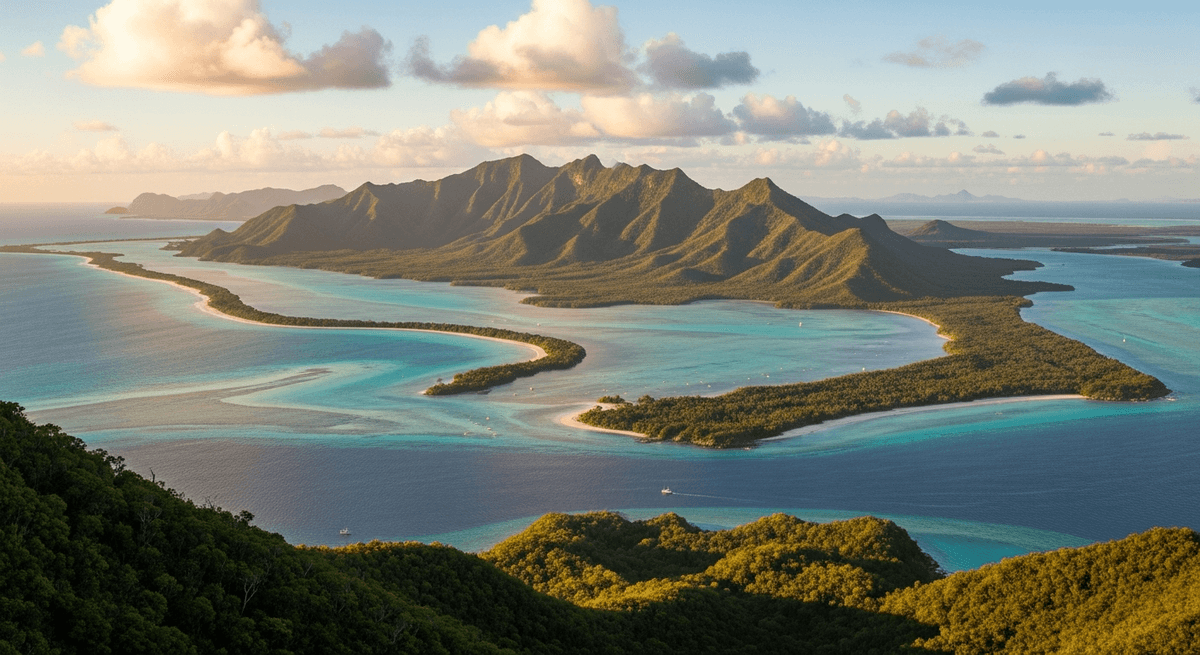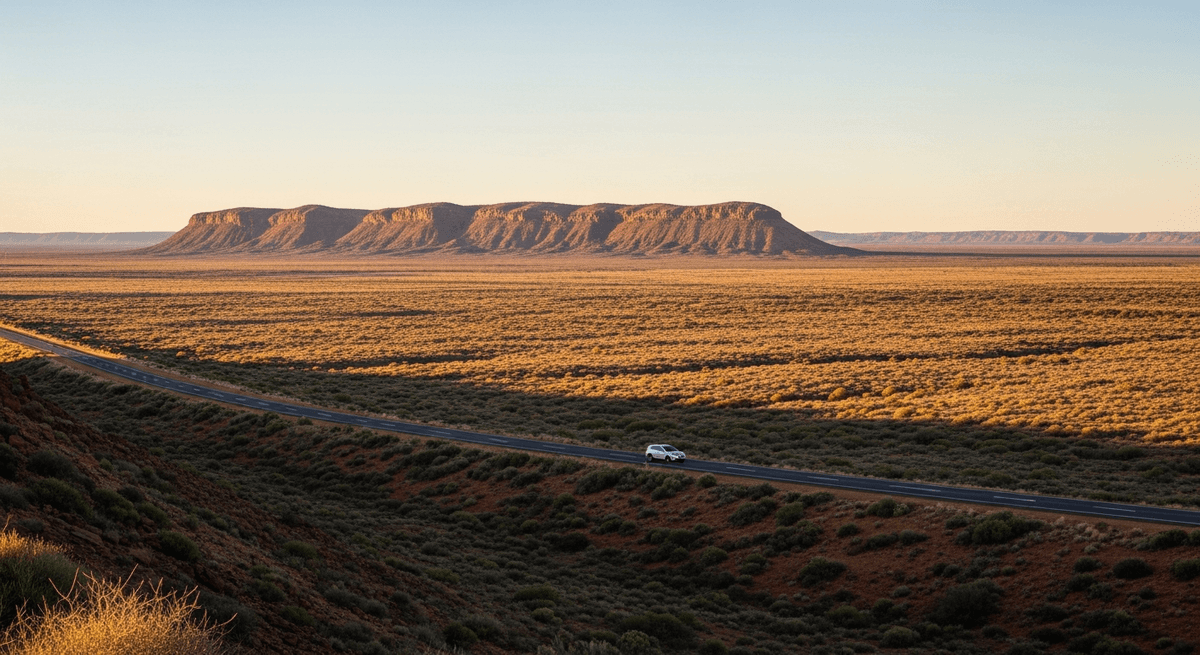

Tasmania is an island the size of Ireland at the bottom of Australia, separated from the mainland by the Bass Strait and, in the matter of crowds and development, by considerably more. One might describe it as the thinking person's escape from the continental bustle, a place where the road signs count distances in dozens rather than hundreds of kilometres, yet somehow manage to contain more genuine discovery per mile than routes ten times their length. The Tasmania road trip, running roughly 2,000 kilometres around the island's perimeter over two weeks, delivers what the Australian mainland's most popular routes no longer quite manage: the sense of being somewhere genuinely remote, on roads that one drives for extended periods without encountering other vehicles, through landscapes that the 21st century has visited but not entirely colonised.
Picture, if you will, a driving holiday that unfolds like a well written mystery novel, each chapter revealing landscapes more surprising than the last. From Hobart's sophisticated waterfront through the Central Highlands to Cradle Mountain's alpine drama, then east to beaches that make Caribbean postcards look rather ordinary, this particular circuit proves that Australia's best kept secret sits not in some remote corner of the continent, but bobbing like a cork in the Southern Ocean, waiting for drivers with the good sense to take the ferry across.
The Route Overview
The complete Tasmania circuit covers approximately 2,000 kilometres, though this figure rather undersells the experience, much like describing Beethoven's Ninth Symphony as "roughly ninety minutes of music." The terrain is such that distance covers slowly, but this is not a complaint. It is a description of a place that rewards the pace it imposes.
The full circuit requires a comfortable two weeks, though one could spend a month exploring the side roads and walking tracks without exhausting the island's capacity for surprise. The driving itself ranges from sealed highways that wind through mountain passes to gravel roads that disappear into wilderness areas with the confidence of paths that know exactly where they're going, even if their destinations aren't marked on conventional maps.
The best season runs from October through April, when the weather behaves more like a cooperative guest than a difficult relative. Summer temperatures rarely exceed 25°C, making this perhaps the only road trip in Australia where one never feels the need to curse the inventor of the internal combustion engine.
Hobart: The Civilised Entry Point
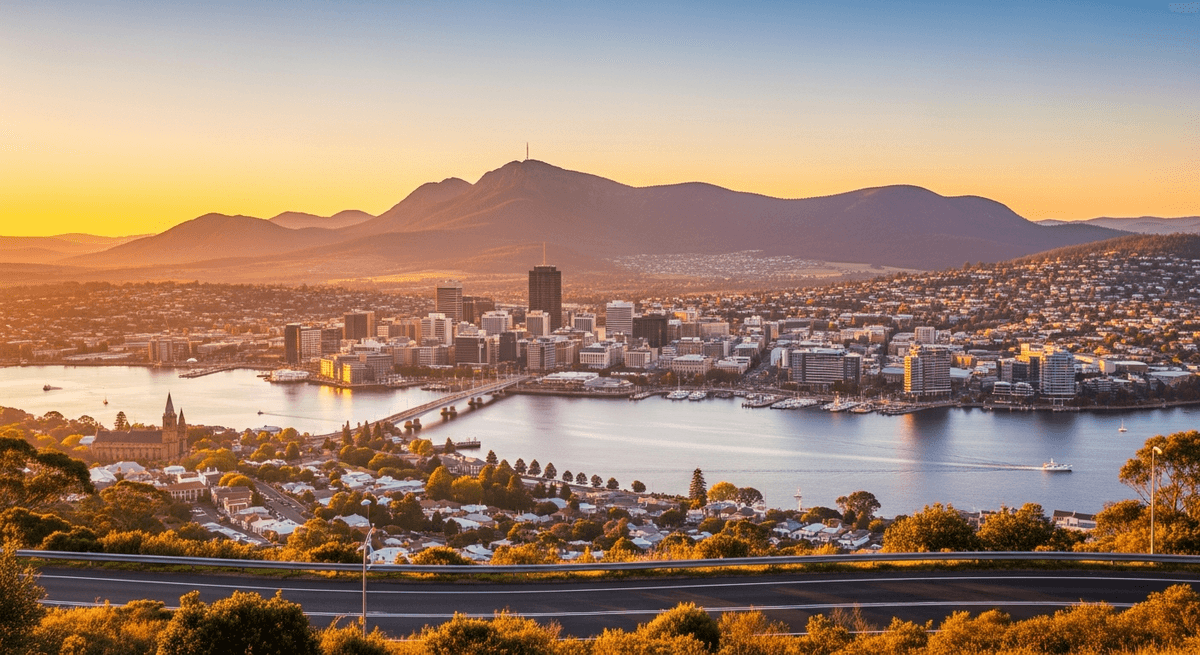
Hobart is Australia's second oldest city and behaves, on balance, more like a large town that has concentrated its energies on quality rather than quantity. The waterfront at Salamanca Place, where sandstone warehouses now contain galleries and restaurants of surprising sophistication, provides the starting point for the Tasmania road trip with the warm efficiency of a destination that understands it is an end in itself. On Saturday mornings, the Salamanca Market transforms the historic precinct into a showcase of artisan produce and craft that Hobart has been staging every week since 1972, with the reliability of a Swiss timepiece and considerably more charm.
Twenty five minutes upstream by ferry sits MONA, the Museum of Old and New Art, occupying a former casino site and containing a private art collection of such deliberate provocation and ambition that it has single handedly shifted Tasmania's position in the international cultural hierarchy. Arriving by ferry to a subterranean museum built into sandstone cliffs feels rather like approaching a Bond villain's lair, if Bond villains were devoted to contemporary art rather than world domination. The museum's founder, David Walsh, clearly understood that the approach should be as memorable as the destination.
Franklin restaurant has established itself as the island's premier dining destination, serving fire cooked local produce with the sort of attention to detail that makes booking weeks in advance feel like a reasonable investment. The wine list favours Tasmanian producers, who have been quietly establishing themselves as Australia's answer to cool climate perfection while the mainland regions were busy with publicity.
Cradle Mountain: The Interior Drama
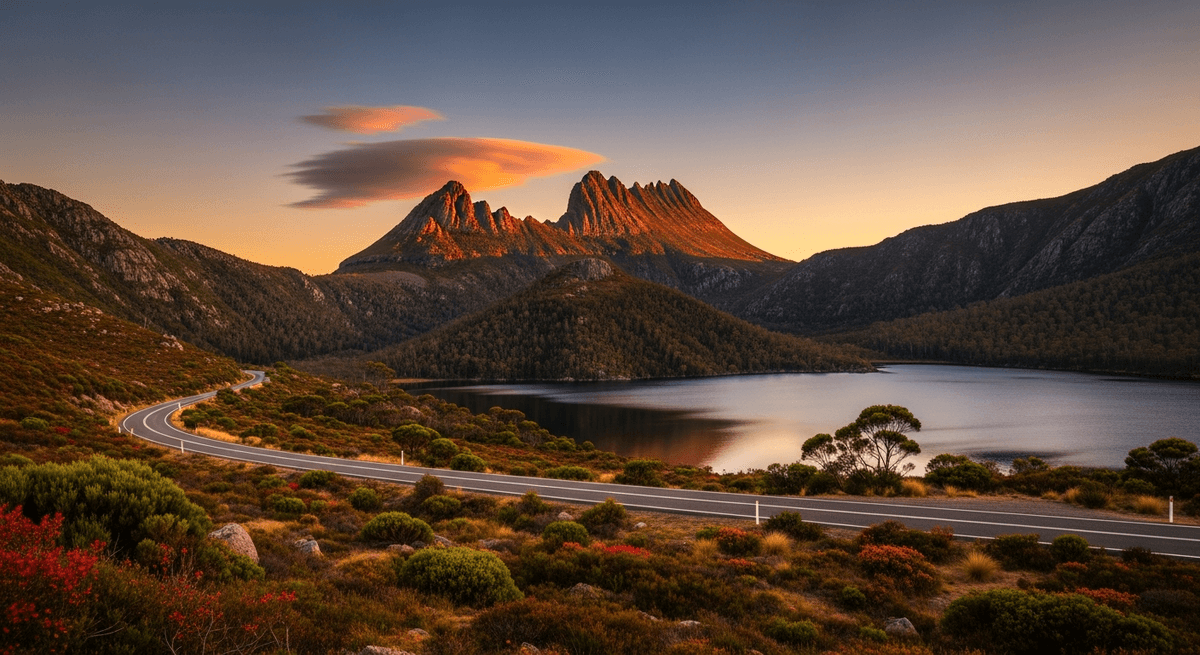
The drive north from Hobart through the Central Highlands delivers the Tasmania road trip's most dramatic interior landscape, unfolding like a stage set designed by someone who understood that subtlety has its place, but not in mountain scenery. Cradle Mountain rises to 1,545 metres above the glacially carved Dove Lake, in a setting of button grass moorland and ancient pencil pine forest that natural history photographers have been visiting since someone with a camera first made it this far and immediately understood the situation.
The Dove Lake Circuit, a six kilometre walk requiring roughly 2.5 hours, is the park's signature experience and deservedly so. The track completes a full circuit of the lake at the mountain's base, through stands of pencil pines that have been growing here since before the last ice age, beside water that reflects Cradle Mountain with a fidelity that dawn fog transforms from the straightforwardly beautiful into something approaching the transcendent. Wombats graze along the circuit track with the completeness of animals that have identified their optimal lifestyle and declined to revise it, displaying the sort of life satisfaction that most humans spend considerable time and money trying to achieve.
The accommodation at Cradle Mountain Lodge offers the rare combination of wilderness immersion and civilised comfort, like staying in a gentleman's club that happens to be surrounded by temperate rainforest. The evening wildlife spotlighting tours reveal just how busy the forest becomes after dark, when animals emerge with the confidence of residents who know they have the place to themselves.
Freycinet Peninsula: East Coast Perfection
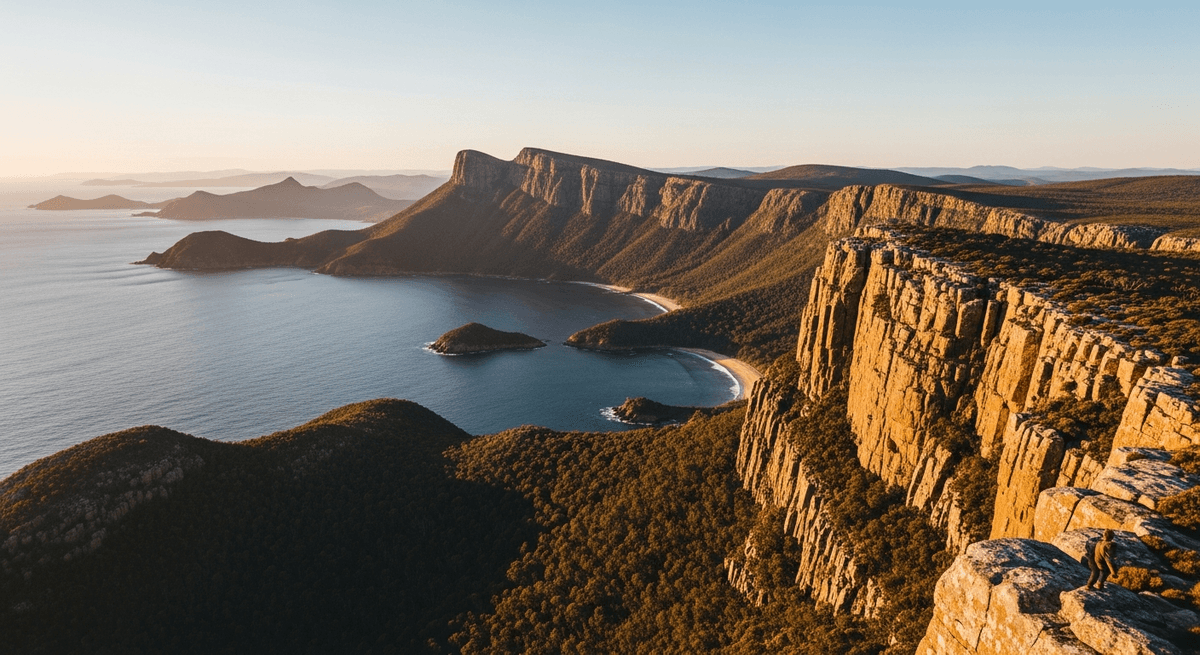
The East Coast of Tasmania is where the Tasmania road trip rearranges one's expectations of what Australian beaches actually look like, proving that the continent's reputation for golden sand and endless surf has been obscuring some rather more sophisticated coastal scenery. The Freycinet Peninsula contains Wineglass Bay, a curved beach of white silica sand backed by the pink granite Hazards mountains, ranked repeatedly among the finest beaches in the world by lists that usually disagree about everything else but seem to have reached unanimous consensus on this particular stretch of coastline.
The hike to the Wineglass Bay Lookout requires 2.5 kilometres and roughly 45 minutes of steady climbing through heath and woodland, emerging onto a granite platform that reveals the bay spread below like a geographic advertisement for the concept of perfection. The further descent to the beach itself adds another 40 minutes but proves highly recommended, particularly for those who suspect that viewpoints, however spectacular, are no substitute for sand between the toes. The beach at the bottom is, in the manner of destinations that require effort to reach, exactly as good as the promise suggests, and notably better in the late afternoon light.
Freycinet Lodge provides eco cabin accommodation with the sort of environmental integration that feels less like camping and more like temporary residence in a very exclusive neighbourhood where the neighbours happen to be wallabies. The restaurant sources ingredients from local waters and farms, serving seafood that tastes like it was swimming that morning, which in many cases it probably was.
Plan this route with GPSSquad
AI powered itineraries, expense splitting, and group coordination in one app.
Start Planning FreeBicheno and the Fairy Penguins
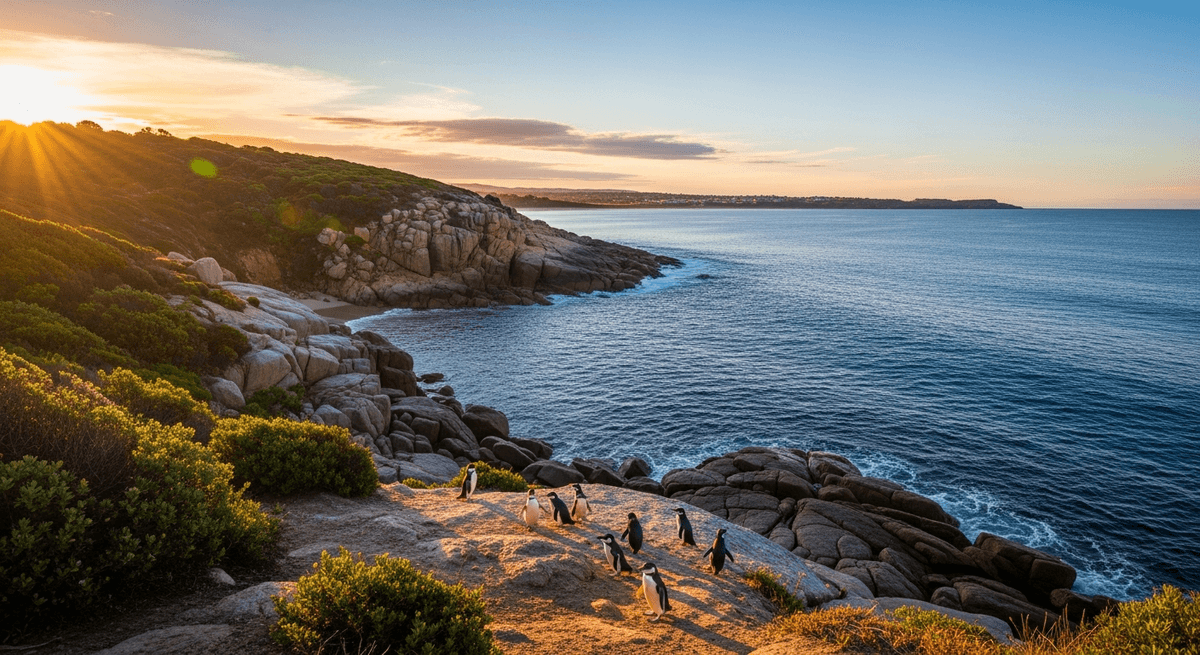
Bicheno, further north along the coast, operates as a fishing town that has discovered tourism without losing its working character, rather like finding a job that pays well but doesn't require wearing a suit. The town's main attraction, beyond beaches that would be considered spectacular anywhere else but seem almost routine by Tasmanian standards, is a fairy penguin colony that comes ashore each evening after dark with the confident waddling of small animals that have correctly assessed their audience and found it well disposed.
The guided penguin tours are worth both the modest cost and the early dinner they require, offering the chance to watch these smallest of penguin species navigate the rocks between ocean and burrows with the determination of commuters who have memorised their route but still find the journey inherently entertaining. The guides provide information about penguin behaviour and conservation with the enthusiasm of people who never tire of watching what they consider the evening entertainment, though the penguins themselves seem largely indifferent to their audience, being more concerned with the serious business of returning home after a day's fishing.
The town's restaurants specialise in seafood with the confidence of establishments that don't need to source their ingredients from distant waters. The local abalone and crayfish appear on menus with the regularity of produce that arrives at the back door rather than via lengthy supply chains.
The Northwest Coast and Stanley
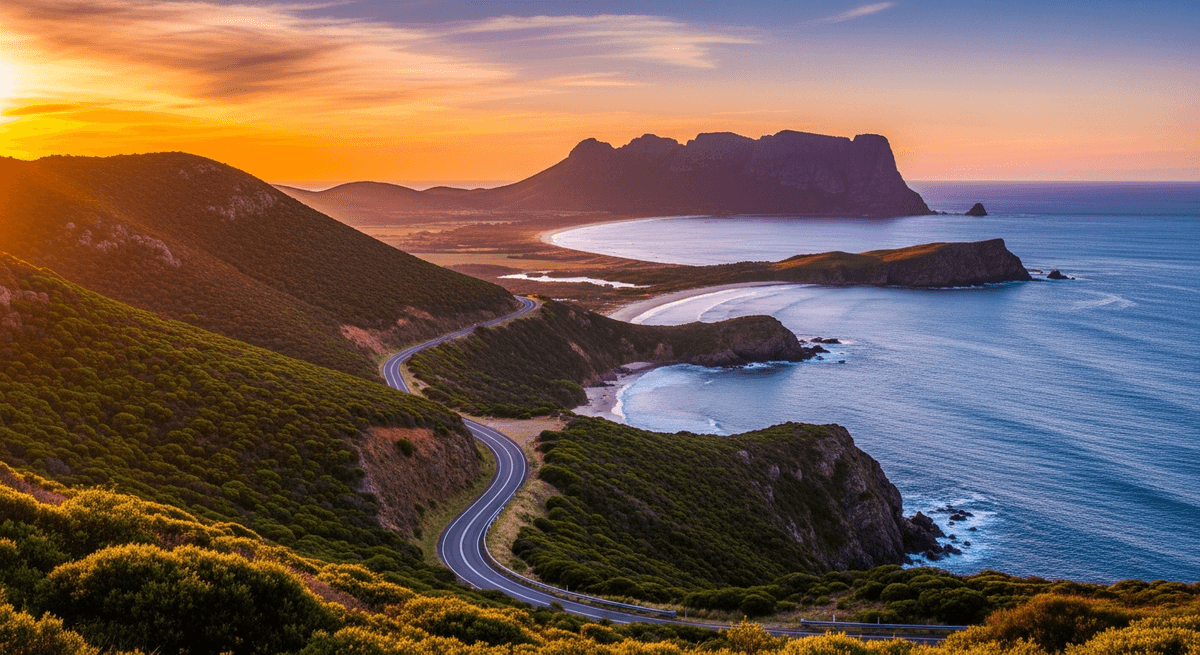
The northwest coast road reveals Tasmania's agricultural heartland, rolling green pastures that stretch to coastal cliffs with the pastoral perfection of a landscape that has been managed rather than merely occupied. Stanley, dominated by the Nut, a 152 metre volcanic plug that rises from the coast like a natural fortress, provides the road trip's most distinctive silhouette and its most charming small town accommodation.
The chairlift to the top of the Nut offers views across Bass Strait that, on clear days, extend to mainland Australia, though the town below proves more immediately engaging than distant continental prospects. Stanley's historic streetscape includes buildings from the 1840s that have been maintained with the care of structures that understand they represent something worth preserving. The local museum documents the area's history as a major port for the Van Diemen's Land Company, back when Tasmania operated under a name that sounded more like a trading enterprise than a holiday destination.
Highfield Historic Site, just outside town, preserves the remains of the Van Diemen's Land Company's agricultural operation, including the manager's house and workers' cottages that provide insight into colonial life with the authenticity of places that were built for use rather than display. The site's interpretation focuses on social history rather than architectural details, revealing how remote colonial settlements actually functioned once the initial excitement of arrival had worn off.
Practical Planning for the Tasmania Road Trip
The Tasmania road trip operates on a scale that makes detailed planning both possible and worthwhile, unlike continental routes where distances render such precision somewhat theoretical. The island's compact size means that accommodation, particularly in the more remote areas, benefits from advance booking during peak season, which runs from December through February. The shoulder seasons of October to November and March to April offer the advantages of milder weather and reduced crowds, along with accommodation rates that won't require remortgaging one's property.
Car rental is essential and readily available in Hobart, with most major international companies represented alongside local operators who specialise in vehicles suitable for gravel roads and wilderness access. Four wheel drive capability proves useful rather than essential, as the main circuit follows sealed roads, though some of the more interesting detours require vehicles with higher ground clearance and the confidence to handle surfaces that might charitably be described as "rustic."
Budget planning should account for accommodation costs that reflect Tasmania's boutique approach to tourism, meals that emphasise local produce and preparation, and fuel costs slightly higher than mainland prices but hardly prohibitive given the distances involved. The island's wine regions produce bottles that represent exceptional value, particularly for those who appreciate cool climate varieties and can resist the temptation to sample everything immediately upon purchase.
Packing should emphasise layers rather than extremes, as Tasmanian weather operates on the principle that all four seasons might appear in a single day, though none will achieve the intensity that makes mainland weather occasionally unbearable. Waterproof jackets prove more useful than sunscreen, though both should be considered essential equipment. Comfortable walking boots are highly recommended, as many of Tasmania's finest attractions require at least modest pedestrian effort to reach.
The road trip rewards flexibility in timing and route, as weather conditions can transform landscapes dramatically and unpredictably, usually in directions that enhance rather than diminish the experience. This is terrain that looks spectacular under grey skies and absolutely magnificent when the sun breaks through, rather like having a reliable friend who happens to be unusually photogenic.
The complete circuit covers approximately 2,000 kilometres over two comfortable weeks, though this itinerary could expand to a month for those who discover that Tasmania's capacity for surprise exceeds their original expectations. The island rewards the pace it imposes, revealing landscapes and experiences that justify every kilometre of winding road and every moment of unhurried exploration. For those seeking more Australian coastal adventures, the Great Ocean Road offers mainland drama, while Western Australia provides the ultimate in outback solitude. Those preferring tropical landscapes might consider Queensland, where the reef meets the rainforest along 1,700 kilometres of coastal perfection. Plan this trip on GPSSquad.