
Utah has arranged five national parks in the southern half of the state with the compositional deliberateness of an art director who has been given an unlimited budget and access to geological timescales. The landscape here exists as if someone had decided that conventional scenery was insufficiently dramatic and had commissioned the Earth itself to create something rather more ambitious. This arrangement of natural wonders, scattered across the red rock country of southern Utah like precious stones on a jeweler's felt, forms what is perhaps America's most spectacular road trip: the Utah national parks loop through the Mighty 5.
The Utah Mighty 5 road trip is the sort of journey that transforms sensible people into the kind of travelers who book two weeks of annual leave and then fret that two weeks might not be nearly enough. It is a 1,200 mile loop through Zion, Bryce Canyon, Capitol Reef, Canyonlands, and Arches National Parks, each one distinct in character yet part of a greater symphony of stone and sky. The southern Utah road trip connects these geological masterpieces through landscapes that serve as magnificent intermissions between the main acts, creating an itinerary that feels less like sightseeing and more like attending a private performance by the planet itself.
The Grand Loop: Route Overview
The classic Utah national parks road trip covers approximately 1,200 miles over 7 to 10 days, though dedicated enthusiasts have been known to stretch it to two weeks without displaying any symptoms of regret. The route typically begins in Salt Lake City, though Las Vegas serves equally well as a starting point for those approaching from the west. The traditional clockwise loop visits Arches and Canyonlands near Moab first, then winds south through Capitol Reef, west to Bryce Canyon, and concludes with Zion before returning north.
Drive time between parks ranges from 1.5 to 4 hours, with the longest stretch being the 4 hour journey from Moab to Capitol Reef. The total driving time is approximately 20 hours, leaving the majority of your time for the more important business of standing slack jawed before landscapes that appear to have been designed by someone with a rather extravagant imagination.
The best season for this Utah road trip itinerary runs from April through October, with spring and fall offering the ideal combination of pleasant temperatures and manageable crowds. Summer brings intense heat to the lower elevations but keeps Bryce Canyon's high country comfortable, while winter transforms the journey into something requiring both snow tires and considerable fortitude.
Moab and Arches National Park: The Geological Gallery
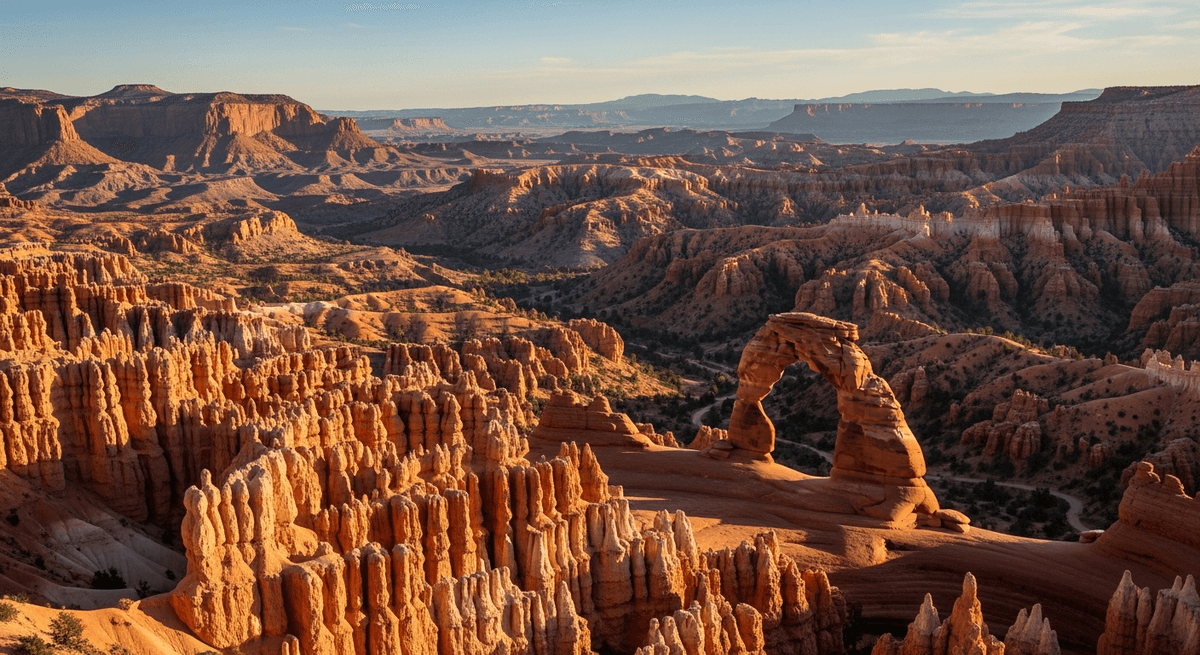
Arches National Park serves as nature's most ambitious sculpture garden, containing over 2,000 natural sandstone arches in various stages of formation and eventual collapse. The park operates like a geological timepiece, with erosion constantly crafting new arches while claiming others, creating a landscape that changes imperceptibly but continuously. Delicate Arch, standing 65 feet tall in splendid isolation with the La Sal Mountains providing a dramatic backdrop, has become Utah's unofficial mascot and appears on everything from license plates to tourism brochures with the persistence of a celebrity who has found their signature pose.
The Windows Section offers a concentration of arches that can be explored in a morning, while the Fiery Furnace requires a guided tour through a maze of narrow canyons and towering fins. The Devils Garden Trail leads to Landscape Arch, the longest natural arch in North America, spanning 290 feet with the delicate grace of a stone rainbow that seems to defy both gravity and common sense.
In Moab, the Broken Oar Cafe serves breakfast portions that could fuel a small expedition, while Pasta Jay's provides Italian cuisine that tastes particularly satisfying after a day of scrambling over slickrock. The town functions as base camp for both Arches and nearby Canyonlands, with accommodations ranging from luxury resorts to campgrounds where one falls asleep under stars so bright they seem to have been polished for the occasion.
Canyonlands National Park: The Vast Amphitheater
Canyonlands National Park operates on a scale that renders most other landscapes quaint by comparison. The Colorado and Green Rivers have spent millions of years carving a labyrinth of canyons, mesas, and buttes that stretches to every horizon with the confidence of a landscape that has nothing left to prove. The Island in the Sky district provides the most accessible viewpoints, positioned 2,000 feet above the canyon floor like a natural balcony designed for contemplating the impressive nature of geological time.
Mesa Arch, perched on the rim of the mesa, frames the distant mountains in a perfect stone window that glows like molten gold at sunrise. The phenomenon attracts photographers who arrive in the predawn darkness like pilgrims seeking enlightenment, and the resulting images justify every early alarm clock. Grand View Point Overlook offers perhaps the most expansive vista in all of Utah's national parks, a panorama that encompasses thousands of square miles of carved stone country.
The White Rim Road provides a more adventurous exploration for those with high clearance vehicles and a day to spare, winding 100 miles through the heart of the canyon country on a route that feels like driving through a geological textbook. The road passes beneath towering sandstone walls and alongside precipitous drops, offering constantly changing perspectives on one of America's most dramatic landscapes.
Capitol Reef National Park: The Hidden Gem
Capitol Reef National Park remains the quietest and most underappreciated member of Utah's Mighty 5, a distinction that speaks more to the overwhelming grandeur of its companions than to any deficiency in its own spectacular offerings. The park preserves a 100 mile long geologic formation called the Waterpocket Fold, a massive wrinkle in the Earth's crust that creates a landscape of towering cliffs, narrow canyons, and natural bridges with the artistic flair of someone who has been given considerable creative freedom.
The historic Fruita district features orchards planted by Mormon pioneers in the 1880s, where visitors can still pick apples, pears, and cherries in season under an honor system that operates with the cheerful optimism of a more trusting era. The Fruita Schoolhouse and Blacksmith Shop provide glimpses into frontier life, while the nearby petroglyphs panel displays artwork created by the Fremont people over 1,000 years ago.
Plan this route with GPSSquad
AI powered itineraries, expense splitting, and group coordination in one app.
Start Planning FreeCapitol Reef's scenic drive winds through Capitol Gorge, where pioneer travelers carved their names into the canyon walls like an early version of social media, creating a historical record that spans from the 1870s to the present day. The hike through the slot canyon provides an intimate experience of the park's geology, with walls that rise hundreds of feet overhead while narrowing to mere arm's width in places.
Bryce Canyon National Park: The Hoodoo Wonderland
Bryce Canyon National Park operates under a geological misunderstanding, being neither a canyon nor particularly concerned with accuracy in naming conventions. What it actually presents is a series of natural amphitheaters carved into the eastern edge of the Paunsaugunt Plateau, filled with thousands of limestone spires called hoodoos that stand in formations of such improbable density and spectacular color that the overall effect suggests a landscape designed by someone with access to a particularly vivid imagination and unlimited artistic license.
The hoodoos range in color from cream to deep red to brilliant orange, shifting hues throughout the day as the angle of sunlight changes. At sunrise, when the light strikes the formations from a low angle, Bryce Canyon produces a display that appears to have been painted in watercolors by an artist working in shades of rose and gold. The phenomenon requires a 5:30 AM departure from one's lodging but rewards early risers with perhaps the most spectacular sunrise in the American West.
The Rim Trail connects the major viewpoints along the canyon edge in a mostly level walk that maximizes scenic reward while minimizing physical exertion, a combination that represents the holy grail of recreational hiking. Sunrise Point, Sunset Point, and Inspiration Point each offer different perspectives on the hoodoo formations, while the more adventurous Navajo Loop and Queen's Garden Trail descend into the amphitheater itself for a ground level appreciation of these geological sculptures.
Ruby's Inn, just outside the park entrance, provides comfortable accommodations and serves as the area's commercial hub, while the lodge within the park offers the considerable luxury of falling asleep and waking up already inside one of America's most extraordinary landscapes.
Zion National Park: The Grand Finale
Zion National Park serves as either the perfect introduction or triumphant conclusion to the Utah national parks road trip, depending on one's directional preferences. The park's main canyon presents itself through a mile long tunnel that emerges into a gorge of such immediate drama that first time visitors have been observed to pull over simply to confirm that the landscape before them is real rather than an exceptionally elaborate stage set. The Virgin River has carved this canyon through layers of Navajo sandstone, creating walls that rise 2,000 feet in shades of cream, pink, and rust that shift color throughout the day like a geological mood ring.
The Narrows, where hikers wade through the Virgin River itself between canyon walls that narrow to 20 feet in places, represents hiking at its most elemental: part trail, part swimming pool, entirely unlike anything else in the American park system. The experience requires waterproof boots and a philosophical acceptance that one will spend the day rather damp, but provides access to slot canyons of extraordinary beauty and intimate scale.
Angels Landing, accessible via a trail that concludes with a half mile scramble along a narrow ridge with chains for handholds, offers perhaps the most spectacular and vertigo inducing viewpoint in Utah's parks. The hike requires permits, a head for heights, and considerable determination, but rewards successful climbers with a 360 degree panorama of Zion Canyon that justifies every chain gripping, heart pounding moment of the ascent.
The town of Springdale, nestled at Zion's entrance, provides an exceptionally civilized base camp with restaurants, galleries, and accommodations that range from luxury resorts to charming bed and-breakfasts. The Zion Park Lodge, located within the canyon itself, offers the ultimate convenience of lodging surrounded by some of America's most dramatic scenery.
Planning Your Utah National Parks Adventure
The Utah Mighty 5 road trip requires more advance planning than a spontaneous weekend getaway but less logistical complexity than mounting an expedition to the South Pole. The America the Beautiful Annual Pass provides access to all five parks for $80, paying for itself before you reach your third park and making you feel financially prudent while spending money on something as frivolous as natural beauty.
Accommodation booking should occur at least three to six months in advance for travel during peak season (April through October), with reservations for in park lodging disappearing faster than cookies at a church social. Camping reservations follow similar timelines and require the reflexes of a stock trader and the persistence of a salmon swimming upstream.
Permits for popular activities like Angels Landing in Zion, the Fiery Furnace in Arches, and certain backcountry hikes require advance reservations through Recreation.gov, a system that operates with the efficiency of a Swiss watch and the user friendliness of a government website. The permit system exists to preserve both the landscape and one's sanity by preventing overcrowding, though it does require planning skills that some find more challenging than the actual hiking.
Packing for this southern Utah road trip should account for dramatic elevation and temperature variations. Zion's desert floor can reach 100°F in summer while Bryce Canyon's 8,000 foot elevation might require jackets even in July. Sturdy hiking boots, plenty of water, sun protection, and layers suitable for everything from desert heat to mountain cool will serve you well across all five parks.
The total cost for a week long Utah national parks road trip ranges from $1,500 to $4,000 per couple, depending on accommodation choices and dining preferences. Budget travelers can camp and cook their own meals, while those preferring more comfort can stay in park lodges and dine at establishments that understand the relationship between spectacular scenery and elevated prices.
This Utah road trip itinerary represents one of America's greatest scenic drives, a journey through landscapes that operate by geological rules the rest of the world hasn't been informed about. The Mighty 5 parks showcase the American West at its most dramatically beautiful, rivaling even Glacier National Park for sheer spectacle, creating memories that persist long after the last photograph has been uploaded and the last souvenir unpacked. For those drawn to the American road trip experience, this Utah circuit stands alongside legendary journeys like Route 66, the Pacific Coast Highway, and the Blue Ridge Parkway as one of the country's most rewarding drives. Plan this trip on GPSSquad.