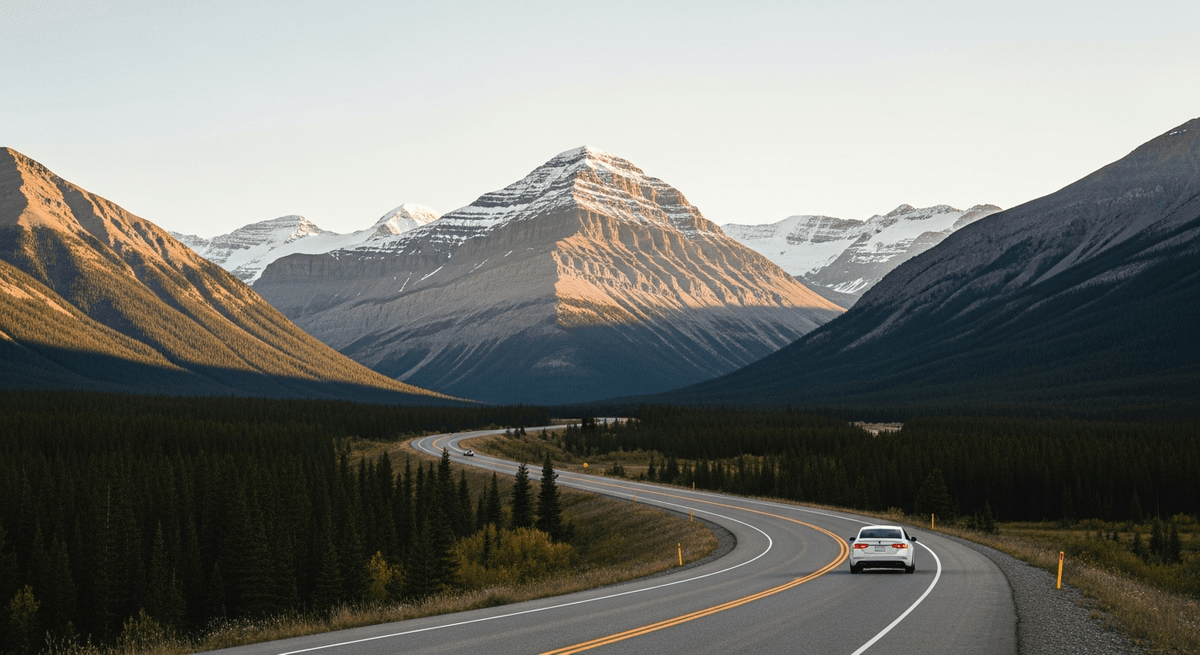

One occasionally encounters roads that possess the sort of geological confidence that comes from having been carved through scenery that has been practising dramatic perfection for rather longer than most civilisations have been spelling their names correctly. The Icefields Parkway, stretching 232 kilometres from Lake Louise to Jasper through the Canadian Rockies, represents the sort of route that makes other scenic drives look like they have been assembled by committee and found wanting in the final review.
This particular ribbon of asphalt threads its way past glaciers that have been accumulating ice since before anyone thought to invent the calendar, above lakes of a turquoise so vivid that photography consistently underperforms in the documentation department, and beneath peaks that arrive in one's windshield with the regular authority of mountains that have been in the dramatic landscape business for 170 million years and have developed a certain professional confidence in their material. The road trip from Banff to Jasper along this route delivers scenery with the sort of relentless magnificence that makes one suspect the Rockies of showing off, though one can hardly blame them for making the most of their assets.
The Route: A Masterclass in Scenic Engineering
The Icefields Parkway unfolds across 232 kilometres of Highway 93, connecting Banff National Park's Lake Louise with Jasper National Park's townsite through what National Geographic declared the most beautiful road in the world in 1941, a designation the mountains have maintained with the sort of effortless superiority that comes naturally to geological features of their vintage. The drive requires approximately four hours if one possesses the superhuman discipline to resist stopping at viewpoints, though this approaches the theoretical rather than the practical, as the scenery delivers photo opportunities with the frequency of a landscape that has been specifically designed to test one's storage capacity.
May through October represents the optimal touring season, when the highway sheds its winter closure and welcomes visitors with the sort of alpine accessibility that transforms from impossible to merely spectacular. July and August offer the warmest temperatures and fullest access to hiking trails, though they also attract crowds with the magnetism of peak season, while September provides golden aspens and fewer tour buses, creating conditions that seasoned road trippers recognise as the sweet spot between accessibility and solitude.
Lake Louise: The Fairmont Beginning
Lake Louise launches the icefields parkway road trip with the sort of opening statement that establishes expectations at an elevation most destinations struggle to maintain throughout their entire presentation. The lake itself, nestled 2 kilometres above the highway amid peaks that frame it like a postcard that has been composed by someone with an advanced degree in scenic arrangement, reflects the Victoria Glacier in waters tinted by glacial rock flour into shades that make the word turquoise seem like a failure of vocabulary.
The Fairmont Chateau Lake Louise, perched on the lakeshore since 1890 with the sort of prime real estate positioning that modern developers study with considerable envy, offers public access to its tearoom, where one may consume scones of legitimate quality while contemplating waters that appear to have been mixed from equal parts melted glacier and liquid gemstone. The lake's walking path provides close encounters with the sort of mountain scenery that makes one understand why early explorers occasionally ran out of superlatives entirely.
For provisions before the northward journey, the village below stocks the essentials with the efficiency of a community that has been serving travellers longer than most cities have been incorporated. The nearby Lake Agnes Tea House, reached via a 3.5 kilometre hiking trail that climbs 400 metres through scenery that justifies every step, serves tea and homemade soup at altitude, creating the sort of earned refreshment that tastes considerably better when consumed above treeline with peaks for company.
Peyto Lake: The Colour That Broke Photography
Forty kilometres north of Lake Louise, Peyto Lake reveals itself from Bow Summit with the sort of dramatic timing that suggests the Rockies have been taking lessons in theatrical presentation. The lake spreads below the viewpoint in a shade of blue that makes previous encounters with the colour seem like rough drafts, resembling nothing so much as a wolf's head when viewed from the official lookout, though one suspects the resemblance was discovered by someone with considerably more imagination than the average topographer.
The short walk to the viewpoint climbs through alpine meadows that burst with wildflowers during July and August, creating foreground interest that photographers attempt to balance against background majesty with the sort of compositional challenge that separates the artists from the enthusiasts. Early morning visits avoid the tour bus convergence and provide lighting that transforms the already spectacular into the genuinely sublime, though the lake maintains its magnificence throughout the day with the consistency of a natural wonder that has learned to perform under pressure.
The Peyto Lake viewpoint operates as the sort of mandatory stop that proves its reputation upon arrival, delivering the kind of vista that makes one understand why people develop lifelong obsessions with mountain photography. The glacial flour suspended in the water creates colours that shift with the light and season, providing a dynamic display that ensures no two visits produce identical experiences, though all visits produce the same fundamental reaction of wondering whether one's camera is adequately equipped for the assignment.
Columbia Icefield: The Frozen Centrepiece
The Columbia Icefield Discovery Centre, positioned at the midpoint of the icefields parkway road trip like an intermission in a particularly spectacular performance, provides access to the largest icefield in the Rocky Mountains south of Alaska. This 325 square kilometre accumulation of ancient ice spreads across the continental divide with the sort of geological grandeur that makes one reconsider the scale of most human achievements, while the Athabasca Glacier extends down from it to within comfortable walking distance of civilisation.
Plan this route with GPSSquad
AI powered itineraries, expense splitting, and group coordination in one app.
Start Planning FreeThe Ice Explorer tours transport visitors onto the glacier itself aboard specially designed vehicles that negotiate the ice surface with massive tyres and the determined confidence of equipment that has been engineered specifically for glacial navigation. Standing on ice that began accumulating three millennia ago, surrounded by crevasses and seracs that dwarf the transport vehicle, provides the sort of temporal perspective that makes one's daily concerns seem refreshingly manageable by comparison.
The Glacier Skywalk extends a glass floored observation platform 280 metres above the Sunwapta Valley, offering views that encompass the icefield, surrounding peaks, and one's own reflection in the transparent floor for those who possess sufficient courage to look directly down. The engineering represents the sort of human audacity that complements rather than competes with the natural magnificence, creating a viewing experience that enhances rather than diminishes the landscape's impact. The centre's restaurant serves meals that benefit considerably from their scenic context, though the glacier views arguably provide more sustenance than the food itself.
Athabasca Falls: The Thundering Interlude
Thirty kilometres south of Jasper, the Athabasca Falls concentrate the considerable volume of the Athabasca River through a narrow quartzite gorge with the sort of hydraulic violence that makes the viewing platforms feel like front row seats at a geological percussion concert. The water pounds through the channel with a force that has been carving the limestone for millennia, creating potholes and sculptural formations that demonstrate what rivers can accomplish when given sufficient time and determination.
The falls viewpoints provide multiple perspectives on the hydraulic drama, from the upper platform that overlooks the initial cascade to the lower trail that traces the river's path through the gorge it has excavated with such persistent artistry. The spray creates rainbows on sunny days with the sort of optical precision that makes one suspect nature of deliberate showmanship, while the sound provides a soundtrack that drowns out traffic noise and most conversation attempts, creating a natural noise barrier that enhances the wilderness experience.
The short trail system around the falls accommodates visitors of most ambulatory capabilities while providing educational signage that explains the geological processes with the sort of accessible science that makes rock formation seem like a fascinating rather than intimidating subject. Photography opportunities abound, though the spray and mist test equipment protection with the sort of environmental challenge that separates the prepared from the optimistic.
Jasper: The Northern Welcome
Jasper National Park receives the icefields parkway road trip at its northern terminus with the relaxed confidence of Canada's largest Rocky Mountain park, spreading across 10,878 square kilometres with the sort of wilderness credentials that make other protected areas seem like they have been trying rather too hard to impress. The townsite itself maintains the comfortable scale of a community that has decided mountain access represents the primary product and sees no compelling reason to elaborate beyond that essential service.
Maligne Lake, reached via a 48 kilometre drive east of town through scenery that serves as an excellent epilogue to the main route, stretches 22 kilometres through the deepest lake in the Canadian Rockies with the sort of reflective perfection that has launched a thousand calendars. The boat tours to Spirit Island provide access to the most photographed location in Jasper, where the mountains arrange themselves around the small island with the sort of compositional perfection that makes one suspect the landscape of having studied art direction.
The elk population of Jasper roams the downtown streets with the proprietary confidence of animals that have correctly calculated the historical timeline and determined their prior claim to the real estate. Evening encounters with these magnificent creatures create the sort of wildlife photography opportunities that make telephoto lenses seem like essential travel equipment, while their casual presence transforms the town into something resembling a very large outdoor zoo where the animals have somehow gained control of the admission policies.
Planning Your Icefields Adventure
The icefields parkway drive demands two days for proper appreciation, though the scenery could easily justify a week for those with the luxury of time and the wisdom to recognise when they have encountered something exceptional. Accommodation options cluster at either end, with Lake Louise and Jasper providing the full range of lodging from camping to luxury resort, while the middle section offers limited but adequate facilities for those who prefer to position themselves closer to the glacial action.
Fuel considerations require attention, as the 232 kilometre route provides limited refuelling opportunities between endpoints, making departure with a full tank one of those practical requirements that prevents scenic appreciation from being interrupted by automotive anxiety. The Saskatchewan River Crossing, positioned roughly halfway along the route, offers petrol and basic provisions with the sort of frontier efficiency that prioritises function over atmosphere but serves the essential purpose admirably.
Weather preparation spans multiple seasons within a single day, as mountain conditions change with the sort of meteorological enthusiasm that makes layering systems essential rather than optional. Waterproof outerwear, warm layers, and sun protection all prove their value during a single outing, while sturdy footwear enables exploration of the various stops without the sort of equipment limitations that constrain photographic opportunities to whatever can be captured from the car park.
Camera equipment deserves particular consideration, as the route delivers the sort of photographic opportunities that test storage capacity and battery life with relentless magnificence. Extra memory cards, portable charging solutions, and lens cleaning supplies prove their worth repeatedly, while a polarising filter helps manage the intense light reflection from snow and water that characterises high altitude photography. The scenery photographs itself, but proper equipment ensures the results match the memory rather than disappointing upon later review, making this Canadian wilderness experience comparable to other world class drives like the Great Ocean Road or the Pacific Coast Highway.
Ready to experience the most beautiful road in the world? GPSSquad's intelligent routing optimises your icefields parkway road trip timing, sequences your stops for optimal lighting and minimal crowds, and ensures you don't miss the hidden gems that transform a great drive into an unforgettable journey alongside other spectacular Canadian routes like the Cabot Trail and Ontario's scenic drives. Plan this trip on GPSSquad.