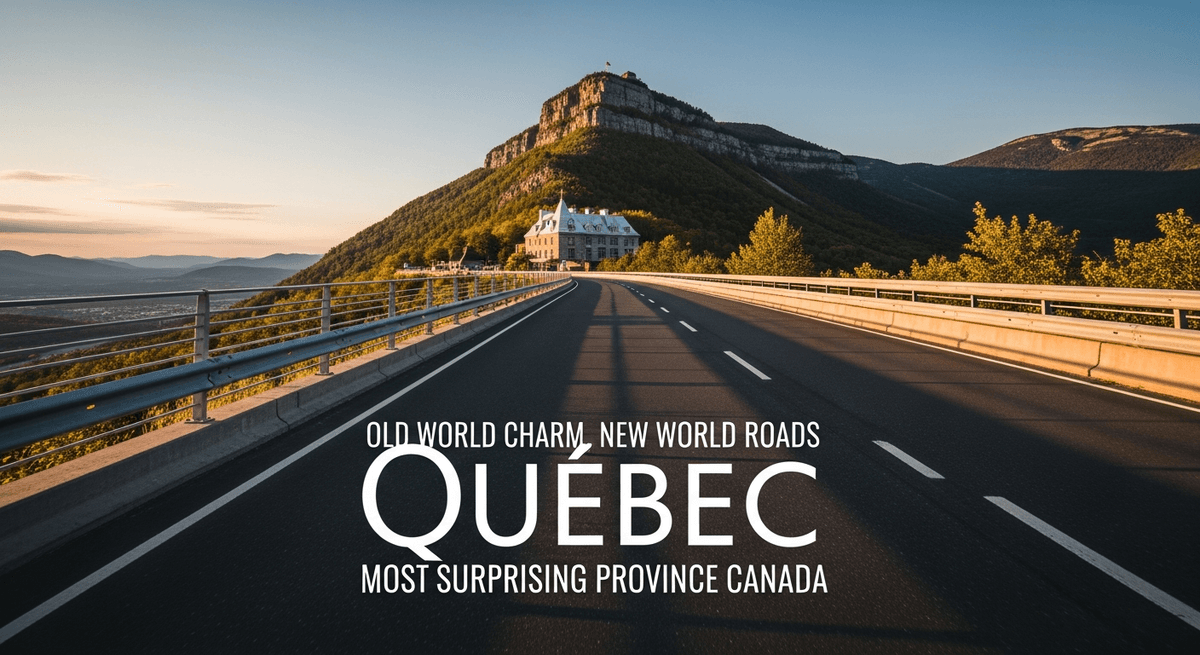

Quebec is the province that Canada keeps tucked away like a favourite nephew's surprisingly accomplished debut novel: familiar enough to feel comfortable, foreign enough to keep one perpetually off balance, and possessed of the particular charm that comes from refusing to conform to expectations. The Quebec road trip delivers this delightful confusion with the efficiency of a Swiss timepiece operated by French philosophers, beginning in Montreal's bilingual bustle and culminating, for those with sufficient stamina and appreciation for the theatrical, on the windswept shores of the Gaspe Peninsula where the St. Lawrence River finally admits defeat and becomes the Atlantic Ocean.
This is emphatically not the Canada of maple syrup advertisements and apologetic hockey players, though both exist in comfortable abundance. Instead, Quebec presents itself like a sophisticated European cousin who moved to North America decades ago, learned to drive enormous distances with casual competence, and developed the most interesting dinner party stories on either side of the Atlantic. The province spans an area larger than Alaska, but the sensible Quebec road trip follows the St. Lawrence River valley from Montreal to Quebec City, then ventures northeast into the Charlevoix region, where the landscape graduates from merely impressive to frankly showing off.
The Route: A Continental European Adventure Without the Jet Lag
The classic Quebec road trip covers approximately 800 kilometres if one includes the Charlevoix extension, though the ambitious can add another 1,200 kilometres for the full Gaspe Peninsula loop. The Montreal to Quebec City segment requires 2.5 hours of direct driving but rewards a more leisurely approach with stops in Trois Rivieres and the Montmorency Falls. From Quebec City, the Charlevoix coast unfolds over 200 kilometres of Route 138, with Baie Saint-Paul, La Malbaie, and Tadoussac serving as the primary staging posts for contemplating the St. Lawrence's transformation from river to something approaching an inland sea.
The optimal season runs from late May through October, when the province sheds its winter reserve and embraces the kind of outdoor dining culture that makes one temporarily forget about mortgage payments and Monday morning meetings. Summer brings festival season and crowds that move with the determined purpose of tourists who have done their research, while autumn delivers the famous Eastern Canadian foliage display with the reliability of a well rehearsed theatrical production much like the renowned New England Fall Foliage displays to the south.
Montreal: Where Two Languages Meet and Agree to Collaborate
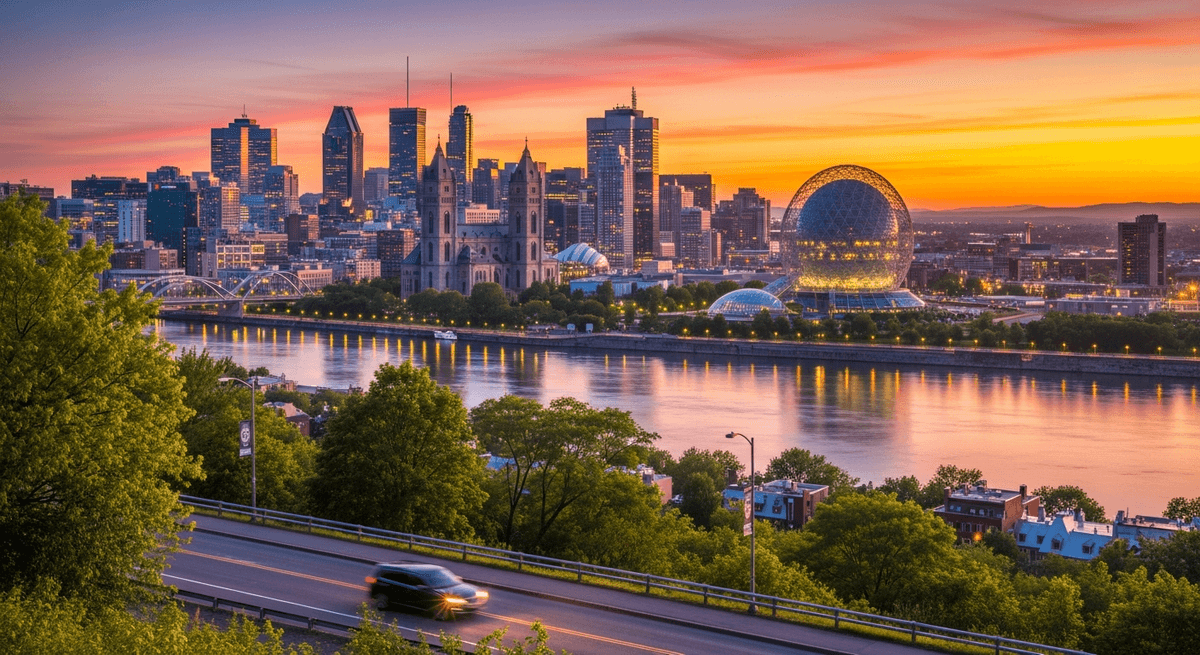
Montreal begins the Quebec road trip with characteristic ambition, operating as both a thoroughly modern North American metropolis and a convincing impression of what Paris might have become if it had been designed by people who understood winter and appreciated bagels. The city sprawls across an island in the St. Lawrence River with the confident urbanity of a place that has been hosting visitors since 1642 and has learned to do it properly.
The Plateau Mont-Royal district exemplifies Montreal's particular genius for cultural fusion, presenting a neighbourhood where Portuguese chicken restaurants operate entirely in French, Victorian era buildings sport external staircases that would make Parisian architects weep with envy, and the corner cafes serve espresso with the casual excellence of proprietors who regard coffee as a fundamental human right. The famous outdoor staircases, initially a fire safety measure that became architectural signature, climb the Plateau's gentle slopes like jazz riffs made manifest in wrought iron and painted wood.
Old Montreal, a ten minute metro ride or pleasant walk south, abandons the modern pretense entirely and commits to 17th-century cobblestones with the determination of historical preservationists who refuse to compromise. Here, the Notre Dame Basilica rises with Gothic Revival enthusiasm, its twin towers and ornate interior suggesting a cathedral that was designed by someone who had been to Europe, taken careful notes, and returned with ambitious plans. The nearby Bonsecours Market, a domed neoclassical building that served as Montreal's city hall and now houses boutiques and restaurants, demonstrates the city's talent for adaptive reuse with considerable style.
For provisions, Montreal's legendary smoked meat requires pilgrimage to Schwartz's Deli on Boulevard Saint Laurent, where the sandwiches arrive with the generous proportions and ritual ceremony of a sandwich shop that has been perfecting its craft since 1928. The adjacent St Viateur Bagel shop operates 24 hours daily, producing wood fired bagels that justify the reputation and the frequent queues with equal conviction.
Quebec City: Medieval Europe's Most Successful North American Franchise
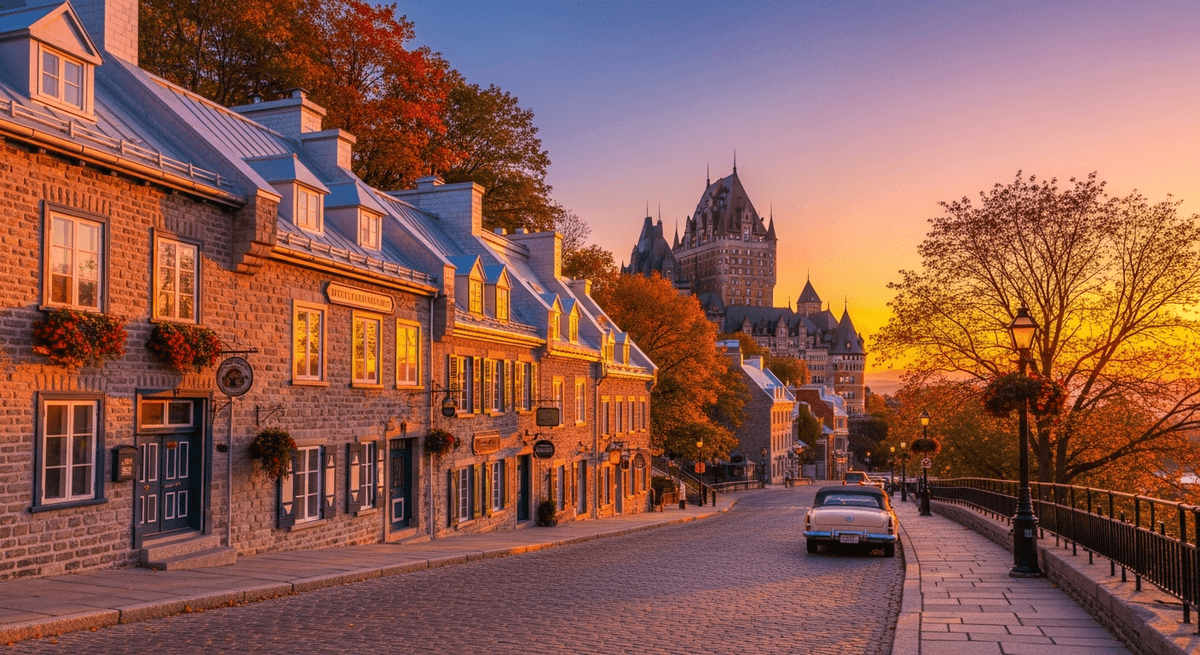
Quebec City announces itself from considerable distance, the Chateau Frontenac's distinctive silhouette rising above the St. Lawrence River like a castle that was designed by architects who had been given unlimited budgets and instructed to make something memorable. The hotel, built by the Canadian Pacific Railway in 1893, dominates the city's skyline with the confident authority of a building that knows it has become the visual shorthand for an entire province.
The Upper Town, contained within 4.6 kilometres of stone fortification walls, presents the most authentically European urban experience available north of Mexico. These are the only remaining fortified city walls in North America, a distinction that Quebec City wears with appropriate pride and considerable tourist infrastructure. The narrow streets within the walls wind past 17th and 18th-century stone buildings with the organic irregularity of a medieval city that grew according to necessity rather than urban planning principles.
The Breakneck Stairs, bearing the ominous name Escalier Casse Cou, connect the Upper Town to Lower Town's Quartier Petit Champlain with the steep determination of steps that were carved when space was precious and safety regulations were more theoretical. The Lower Town's cobblestone streets and stone buildings house galleries, boutiques, and restaurants that cater to visitors with the practiced efficiency of North America's oldest commercial district, established in 1608 and refined through four centuries of hospitality.
Montmorency Falls, just nine kilometres east of the old city, provides the area's most dramatic natural spectacle, dropping 83 metres into the St. Lawrence with considerably more height than Niagara and arguably more dramatic impact per square metre of viewing area. The falls freeze partially in winter, creating ice formations that attract ice climbers and photographers in equal measure, while summer brings suspension bridge crossings and cable car rides for visitors who prefer their natural spectacles with accompanying infrastructure.
Plan this route with GPSSquad
AI powered itineraries, expense splitting, and group coordination in one app.
Start Planning FreeThe Charlevoix Coast: Where Meteors Created Tourist Destinations
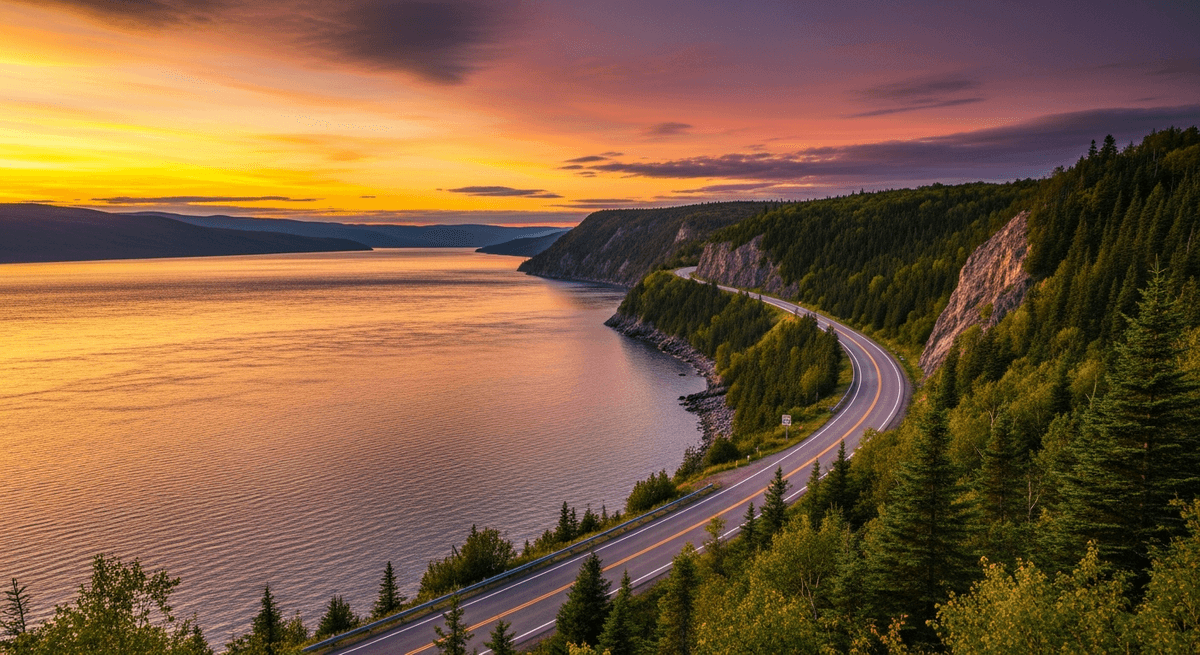
The Charlevoix region begins at Baie Saint-Paul, approximately 90 kilometres northeast of Quebec City, where the landscape transitions from cultural tourism to geological drama with the subtlety of a meteor impact, which is precisely what created this UNESCO World Biosphere Reserve 350 million years ago. The resulting crater, 56 kilometres in diameter, produced the undulating topography where the Laurentian Mountains meet the St. Lawrence River with an abruptness that generates views of frankly unreasonable quality.
Baie Saint-Paul has cultivated its reputation as an artists' colony since the 1760s, when painters discovered the exceptional light quality that occurs when mountains, river, and Quebec sky collaborate on atmospheric effects. The town's galleries and studios line narrow streets that wind between 19th-century buildings with the organic charm of a community that grew around artistic inspiration rather than commercial planning. The weekly farmers market, held Saturdays from May through October, showcases regional specialties including Charlevoix lamb, local cheeses, and maple products that represent the artisanal end of Quebec's famous syrup industry.
La Malbaie, further northeast along Route 138, centers around the Fairmont Le Manoir Richelieu, a castle hotel that has been perched on its cliff above the St. Lawrence since 1899, greeting guests with the confidence of an establishment that has hosted presidents, celebrities, and wealthy tourists through three centuries of changing fashions. The hotel's golf course, carved into clifftop terrain, offers views that make concentration on putting somewhat challenging, while the surrounding village provides art galleries, hiking trails, and restaurants that specialize in regional cuisine with ingredients sourced from local farms and the St. Lawrence's abundant waters.
Tadoussac: Where Rivers Become Whale Highways
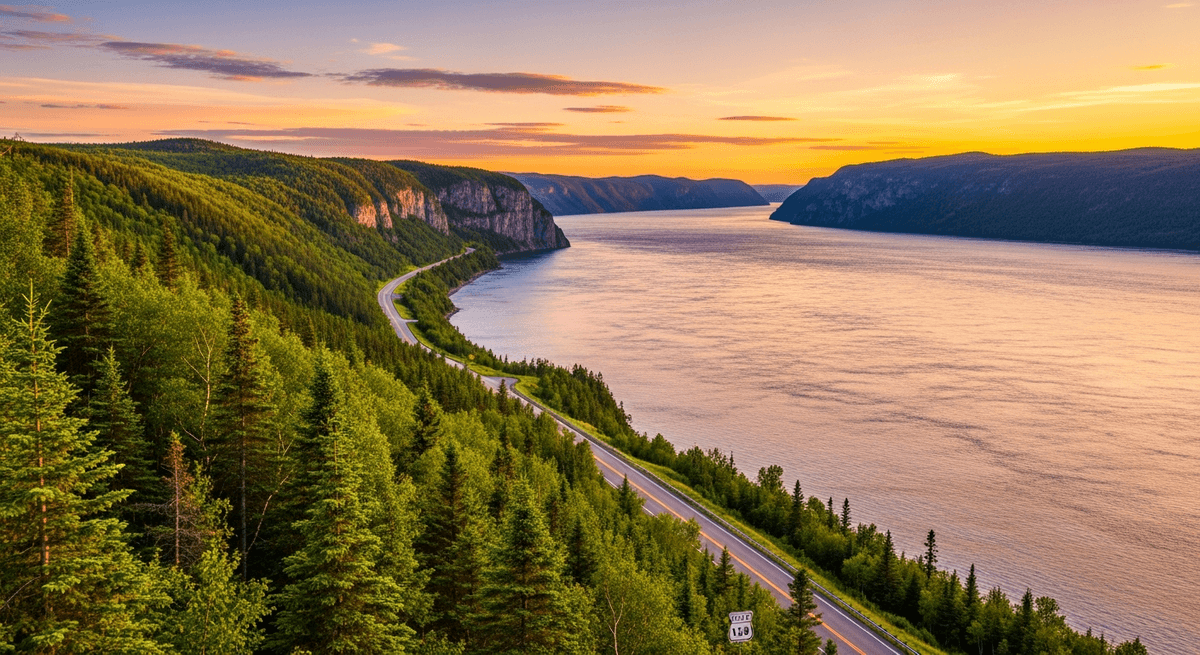
Tadoussac occupies the confluence of the Saguenay Fjord and the St. Lawrence River, a geographical circumstance that creates one of the world's most reliable whale watching destinations and the northern terminus for most Quebec road trips. The town itself, population approximately 800, operates with the focused efficiency of a community that has organized itself entirely around the premise that marine mammals are more interesting than most human activities, a hypothesis that the local beluga, blue, fin, and humpback whales seem determined to prove correct.
The Saguenay Fjord, carved by glaciers and maintained by the deep, cold waters that flow from the Canadian Shield, creates the upwelling currents that support the marine food chain from krill to the largest whales on earth. Beluga whales maintain year round residence, their white forms visible from shore throughout the ice free months, while the larger species arrive with the warming waters of late spring and remain through October's first frost warnings.
The Hotel Tadoussac, a distinctive red roofed building that has been welcoming visitors since 1942, provides accommodation with views directly over the whale watching waters, though the establishment's most famous feature may be its lobby's collection of vintage whale watching photographs and the guest register signatures of visitors who arrived skeptical and departed as marine mammal enthusiasts. The hotel's restaurant specializes in regional dishes that emphasize local ingredients, including Atlantic salmon, snow crab, and Charlevoix lamb, prepared with French culinary techniques adapted to Canadian ingredients and portion expectations.
Practical Planning: Navigation, Budgets, and the French Language Advantage
The Quebec road trip operates most smoothly from late May through October, when the province emerges from its winter contemplation period and embraces the kind of outdoor cultural life that makes visitors temporarily reconsider their permanent address decisions. July and August bring peak season crowds and corresponding accommodation prices, while September delivers autumn foliage that attracts photographers from considerable distances and traffic that moves with the measured pace of tourists who are stopping frequently for photographs.
Budget planning benefits from Quebec's appreciation for both luxury and value, with accommodations ranging from historic hotels that charge accordingly to charming bed and breakfasts operated by hosts who regard guest satisfaction as a personal mission. Dining costs vary significantly between Montreal's diverse restaurant scene, where excellent meals can be found at all price points, and smaller towns where fewer options typically mean higher quality and moderate prices. Gas stations appear with reliable frequency along major routes, though rural areas may require more attention to fuel planning than urban drivers typically practice.
The French language presents less difficulty than many English speaking visitors anticipate, particularly along tourist routes where bilingual signs and English speaking staff are standard. However, basic French phrases enhance the experience significantly, and Quebec's residents typically appreciate efforts at their primary language with warmth that exceeds mere politeness. GPS navigation handles French street names with reasonable accuracy, though local knowledge of construction detours and seasonal road closures provides advantages that technology cannot always supply.
Packing considerations should account for Quebec's variable weather, even during summer months when morning mist along the St. Lawrence can require layers that become excessive by afternoon. Rain gear proves valuable given the province's maritime influences, while comfortable walking shoes are essential for navigating Quebec City's cobblestone streets and historic districts that were designed for pedestrian rather than automotive convenience.
The Quebec road trip rewards preparation with experiences that exceed expectations as reliably as a well researched restaurant recommendation, combining cultural immersion, natural spectacle, and the particular satisfaction that comes from discovering that Canada contains entire regions that operate according to different principles than the rest of the continent, much like discovering Ontario's diversity from Toronto to the Canadian Shield or exploring Cape Breton's coastal magnificence through the Cabot Trail. Plan this trip on GPSSquad, where our route optimization handles the French navigation details while ensuring you arrive at Montmorency Falls during optimal lighting conditions and reach Tadoussac in time for the evening whale watching tours that locals recommend but guidebooks often overlook.