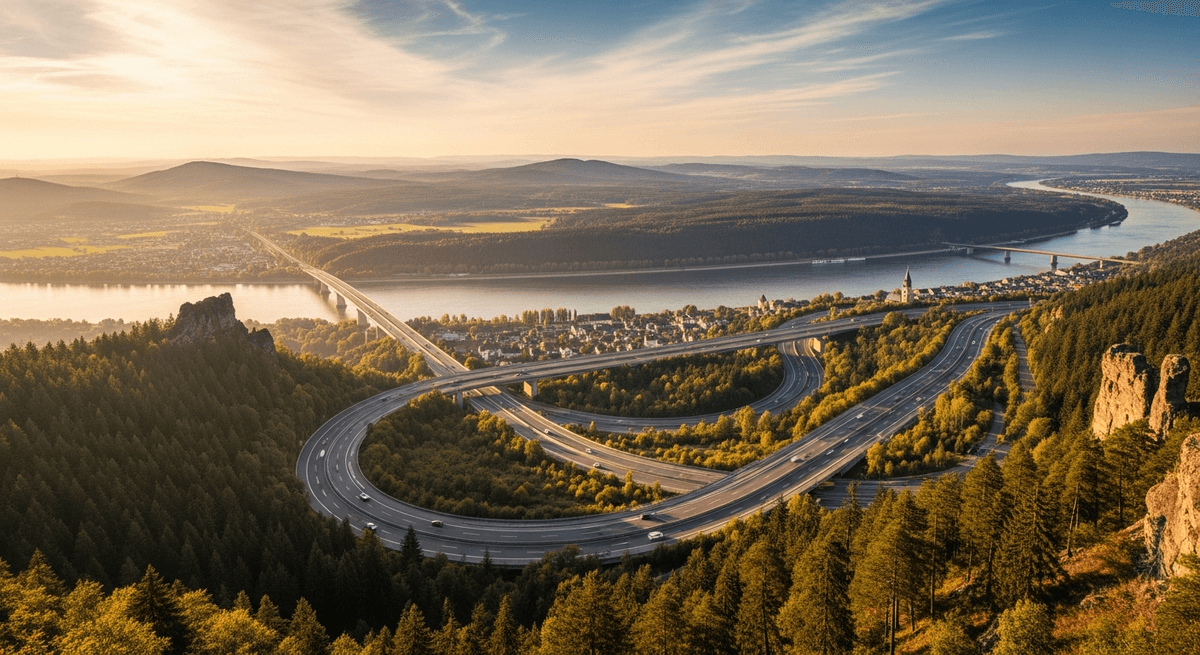
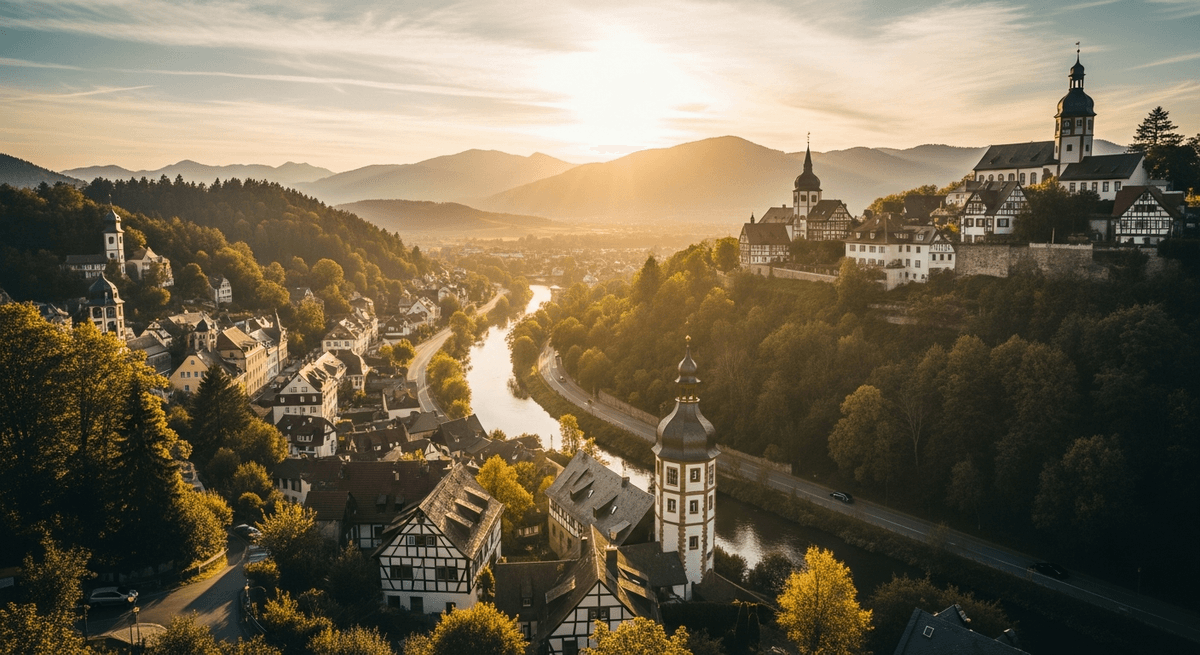

There are certain roads that exist not merely to connect places but to vindicate the very notion of the journey itself, and the Romantic Road through Germany stands among them like a beautifully preserved medieval manuscript that happens to be 460 kilometres long. Running from Würzburg in wine blessed Franconia to Füssen at the foot of the Bavarian Alps, this route threads through a succession of perfectly preserved towns with the confidence of a path that knows it leads to somewhere worth reaching. Each settlement along the way appears to have been dipped in some preservative solution of historical good fortune, emerging centuries later looking like the medieval town planners' most optimistic sketches brought to vivid life.
The Romantische Straße, as the road signs faithfully announce in Gothic script, has maintained its reputation as Germany's most celebrated scenic drive since 1950, when tourism officials had the excellent sense to recognise what local residents had known for centuries: that this particular string of towns possessed the rare quality of making visitors feel they had stumbled into a fairy tale that happened to serve excellent beer and provide comfortable accommodation. A road trip along this route unfolds like a carefully orchestrated symphony of cobblestones and half timbered houses, punctuated by the occasional baroque flourish and culminating in a castle so fantastical it has become the template for fictional royalty worldwide.
The Route: From Wine Country to Alpine Drama
The Romantic Road stretches 460 kilometres from north to south, requiring roughly six driving hours if one possessed the questionable judgment to attempt it without stops. The sensible traveller allows three to five days, permitting proper appreciation of medieval market squares and adequate sampling of Franconian wines. Spring through early autumn provides the most agreeable weather, though winter transforms the route into something approaching a Christmas card illustration, complete with snow dusted castle towers and mulled wine in market squares.
The journey begins in Würzburg, where the Main River reflects baroque palaces with the composure of water that knows it's providing an excellent backdrop. From there, the road winds southward through increasingly pastoral countryside, passing through Rothenburg ob der Tauber (population: 11,000 plus several thousand daily visitors), Dinkelsbühl, and Nördlingen before reaching the Alpine foothills and the theatrical finale of Neuschwanstein Castle. Each town appears at precisely the moment when the previous one's charm has been fully absorbed, demonstrating the kind of impeccable timing usually associated with well rehearsed dinner parties.
Würzburg: Baroque Splendour and Franconian Excellence
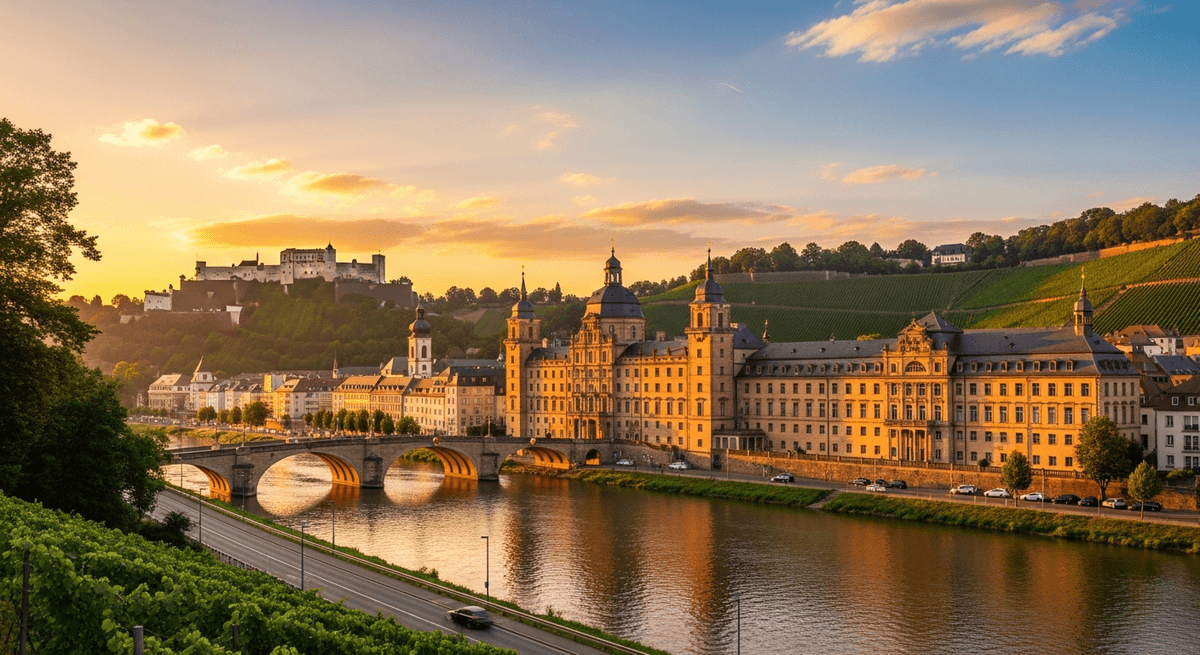
Würzburg announces itself along the Main River with the understated confidence of a city that possesses both excellent wine and a UNESCO World Heritage palace, two advantages that have historically proven sufficient for most civic purposes. The Residence, completed in 1744, contains Tiepolo's ceiling fresco in the Imperial Hall, a work of such magnificent scale and ambition that visitors often find themselves developing neck strain from prolonged upward gazing. The fresco depicts the four known continents paying homage to the Prince Bishop, a subject matter that Tiepolo approached with the enthusiasm of an artist who recognised he was creating his masterpiece and intended to make the most of the opportunity.
The surrounding Franconian wine region produces Steinwein, served in the distinctive Bocksbeutel bottle that resembles a flattened gourd and contains wine of considerably more sophistication than its container might suggest. The Staatlicher Hofkeller, located in the Residence's cellars, offers tastings that demonstrate why Franconian whites have maintained their reputation despite coming in bottles that appear to have been designed by someone with strong opinions about conventional wine bottle shapes. The old town spreads along the river with the relaxed arrangement of a place that has learned to balance tourist attention with local life, achieving that delicate equilibrium through centuries of practice.
Rothenburg ob der Tauber: The Medieval Masterpiece
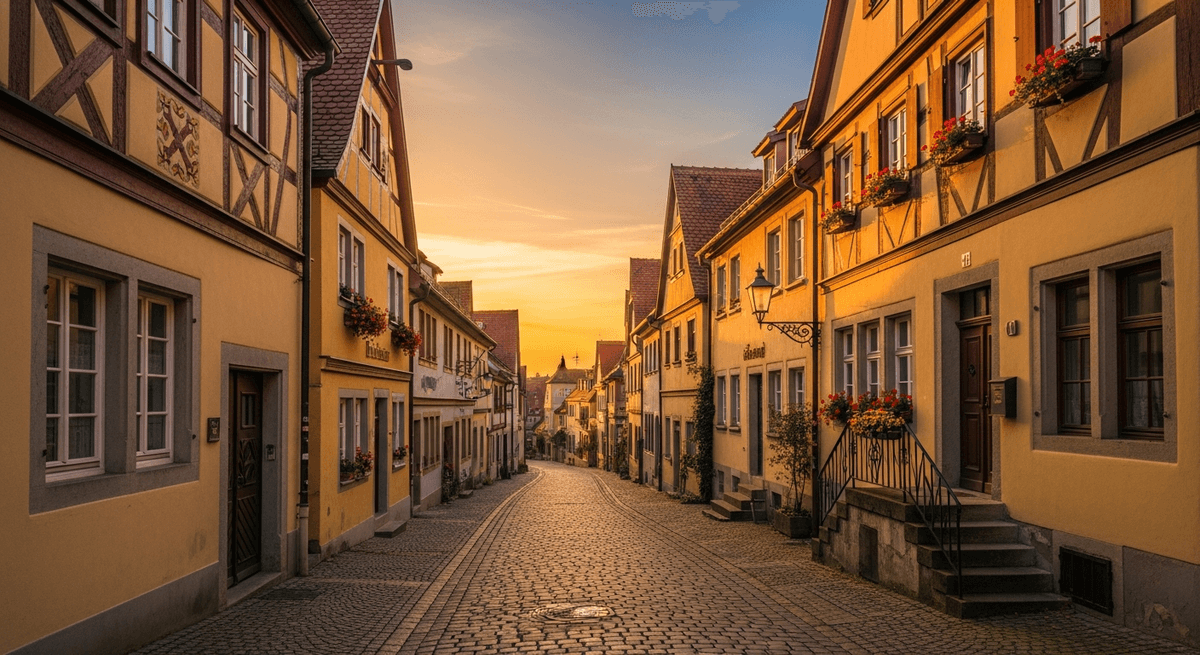
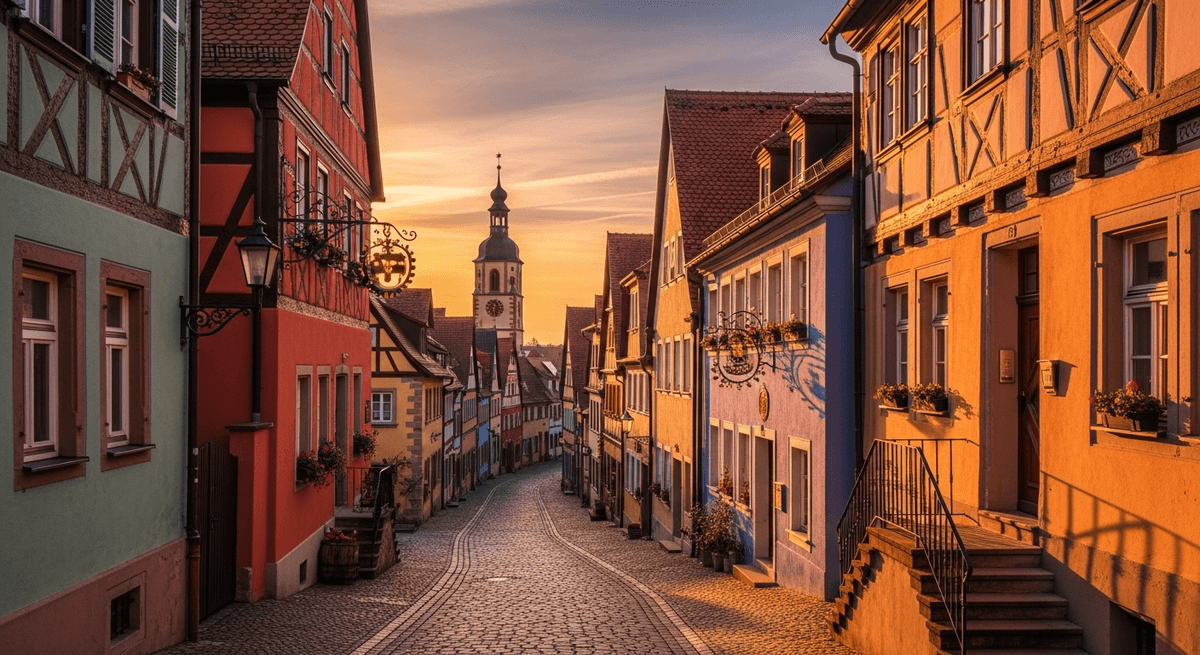
Rothenburg ob der Tauber occupies its position as the Romantic Road's most photographed destination with the resigned grace of a beauty that has grown accustomed to constant admiration. The town walls, dating from the 13th and 14th centuries, encircle the old town in their original 2.5 kilometre entirety, providing a walkable perimeter that offers views over red tiled rooftops and half timbered houses arranged with the aesthetic precision of a master craftsman's demonstration piece. The famous Plönlein junction, where two medieval towers frame a narrow cobblestone street, possesses the compositional perfection of a scene designed specifically for postcards, which it has obligingly become.
The market square centres on the Town Hall, its Renaissance arcade providing shelter for the weekly market that has operated continuously since medieval times, adapting from livestock and grain to locally produced crafts and regional specialties without losing its essential character. The Käthe Wohlfahrt Christmas Museum occupies four floors of a medieval building, displaying Christmas decorations and ornaments with the thoroughness of an institution dedicated to proving that December 25th represents not merely a date but a philosophical position on seasonal celebration. The museum shop, open year round, approaches Christmas merchandise with Germanic efficiency, offering visitors the opportunity to purchase Bavarian glass ornaments in July with perfect seriousness.
Early morning visits reward travellers with empty cobblestone streets and the opportunity to photograph the famous medieval corners without navigating around tour groups, while evening brings the soft illumination of traditional streetlamps that transform the already atmospheric town into something approaching theatrical perfection.
Dinkelsbühl: The Quieter Jewel
Dinkelsbühl presents itself 50 kilometres south of Rothenburg as the medieval town that tourism has not yet discovered with the same intensity, a circumstance that regular visitors guard like a carefully kept secret. The town walls remain intact around the old quarter, though they're lower and less militaristic than Rothenburg's fortifications, suggesting a place that preferred diplomatic solutions to territorial disputes. The market square centres on St. George's Minster, a Gothic church whose spire rises above the surrounding buildings with the measured confidence of architecture that knows it provides the perfect focal point for the town's skyline.
The Deutsche Haus, dating from 1440, operates as both hotel and restaurant, serving traditional Bavarian cuisine in dining rooms where the original timber beams and painted ceilings have been maintained with the attention to detail that characterises the entire town. Local specialties include sauerbraten and spätzle, prepared according to recipes that have evolved gradually over centuries rather than being revolutionised by culinary fashion. The town's quieter atmosphere permits longer contemplation of architectural details: the painted facades, the wrought iron signs, the window boxes that bloom with seasonal flowers maintained by residents who understand their role in the town's overall aesthetic composition.
Plan this route with GPSSquad
AI powered itineraries, expense splitting, and group coordination in one app.
Start Planning FreeNördlingen: The Crater Town
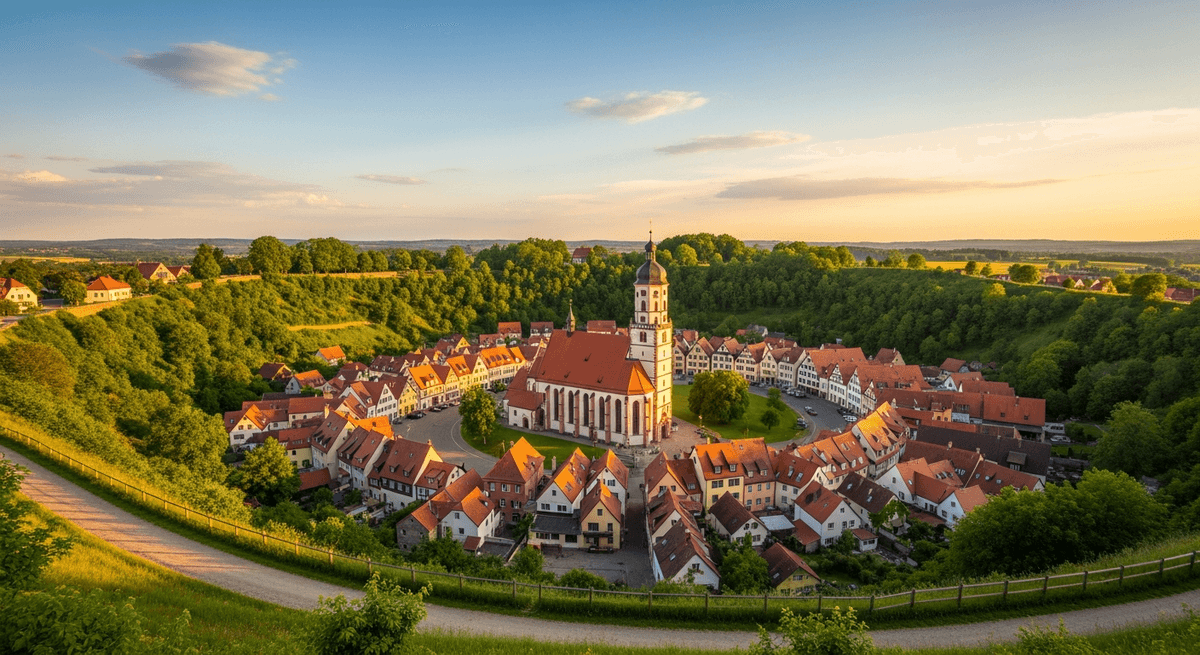
Nördlingen occupies the distinction of being the only medieval town in Germany built entirely within a meteorite crater, though this geological peculiarity remained unknown to residents until scientists identified the 15 million year-old Ries Crater in the 1960s. The revelation that their perfectly circular town walls followed the rim of an ancient cosmic impact site gave locals the sort of unexpected scientific celebrity usually reserved for places that actively seek such attention. The impact created suevite, a rock containing microscopic diamonds formed by the meteorite's collision, which medieval builders unknowingly used to construct the entire old town, creating what may be the world's only diamond studded medieval cityscape.
The town walls remain completely walkable in their 2.7 kilometre circuit, providing views across the crater floor that take on additional drama once one understands the cosmic forces that shaped the landscape. St. Georg's Church tower, known locally as "Daniel," rises 90 metres above the market square and offers panoramic views across the crater that extend to the forested rim 12 kilometres away. The Ries Crater Museum explains the geological history with the enthusiasm of an institution that discovered it possessed one of the most extraordinary origin stories in European municipal history, displaying rock samples and impact evidence with justified pride in their unique circumstances.
Augsburg: Renaissance Grandeur
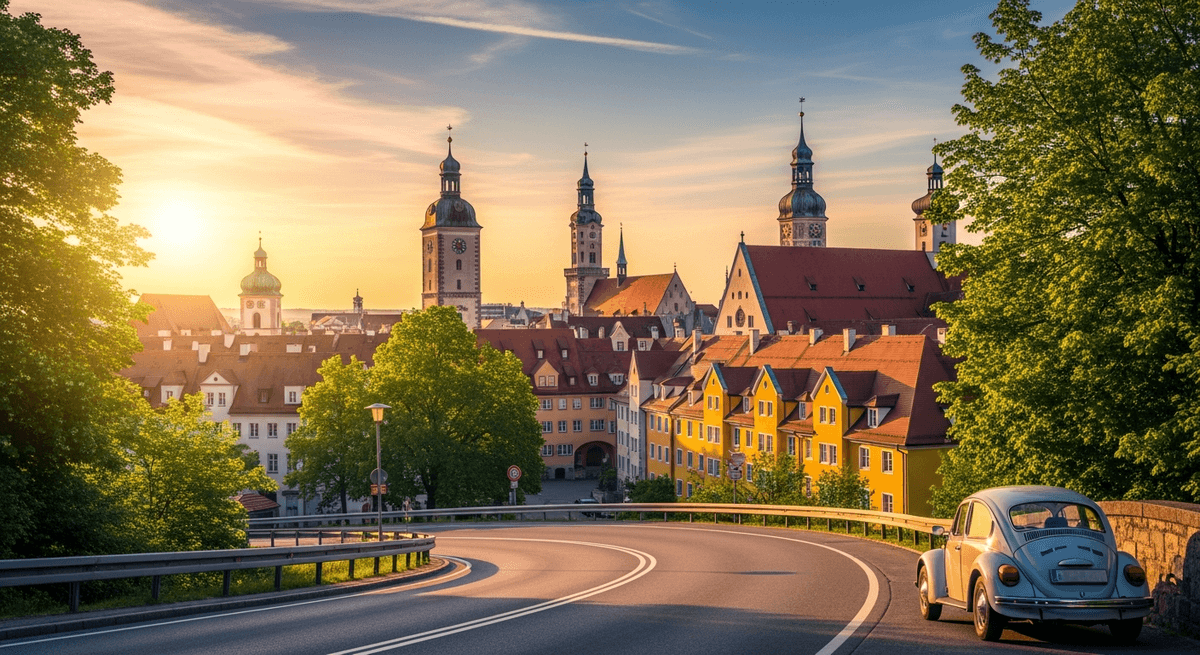
Augsburg enters the Romantic Road narrative as the route's most substantial city, approaching the journey's conclusion with the commercial confidence of a place that helped finance the Renaissance through the banking fortunes of the Fugger family. The Fuggerei, completed in 1523, stands as the world's oldest social housing complex, providing apartments for Catholic residents in need at an annual rent that has remained unchanged for five centuries: one Rhenish guilder, now equivalent to 0.88 euros. The complex continues to house residents according to its original charter, creating the remarkable situation of 16th-century social policy functioning effectively in the 21st century.
The Golden Hall in the Renaissance Town Hall displays the wealth and artistic sophistication that made Augsburg one of Europe's most influential cities during the 16th century, its ceiling paintings and gilded decorations restored to their original brilliance following wartime damage. The cathedral, combining Romanesque and Gothic elements with the confidence of builders who worked across multiple centuries, contains the oldest figural stained glass windows in the world, depicting prophets and kings with the artistic skill that established Augsburg as a centre of medieval craftsmanship.
Füssen and Neuschwanstein: The Theatrical Finale
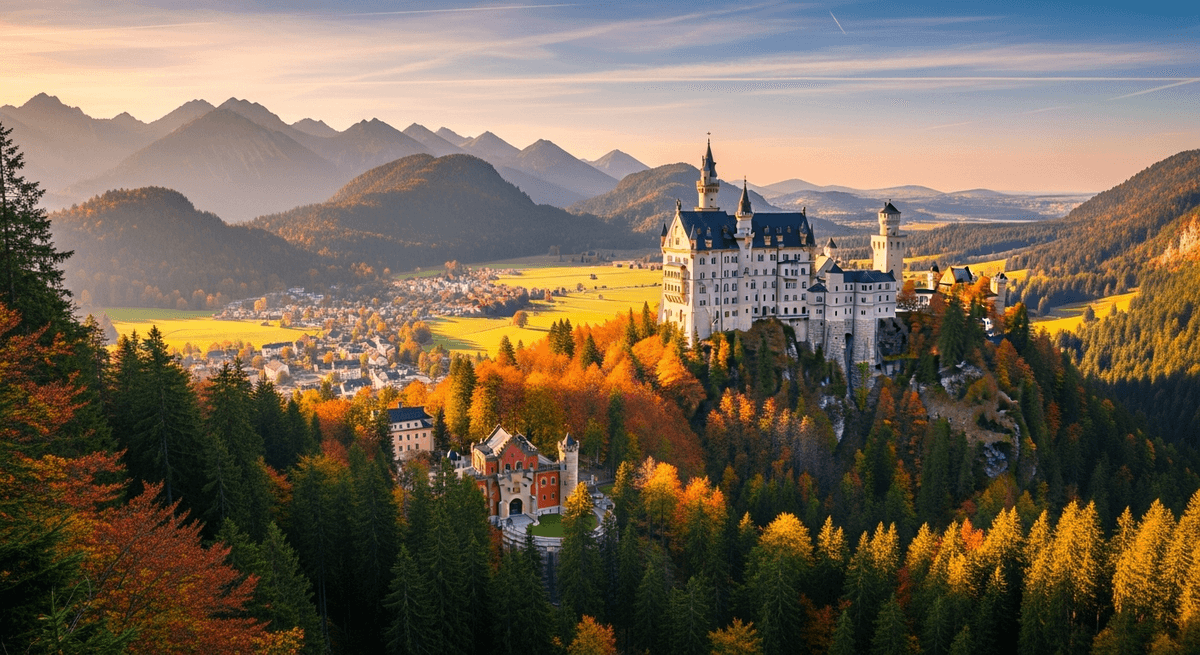
The Romantic Road concludes at Füssen, nestled in the Alpine foothills with the scenic satisfaction of a town that knows it provides the perfect setting for the route's dramatic finale. Neuschwanstein Castle rises from its rocky outcrop like a medieval fantasy brought to three dimensional life, which accurately describes its origins as King Ludwig II's attempt to create the perfect romantic castle using 19th-century engineering and unlimited royal funding. Construction began in 1869 according to Ludwig's detailed specifications, inspired by Wagner's operas and the king's romantic vision of medieval chivalry, though Ludwig's mysterious death in 1886 left the project forever incomplete.
The castle interior, visible through guided tours that require advance booking with the precision of opera tickets, reveals rooms decorated with scenes from Wagner's works and a throne room that Ludwig never lived to furnish. The Singers' Hall stretches across the castle's fourth floor, designed to host performances of Wagnerian opera for an audience of one, demonstrating the sort of architectural extravagance that royal patrons could achieve when untroubled by budgetary constraints. The castle's exterior, familiar from countless photographs and film adaptations, proves even more dramatically situated than its reputation suggests, perched above the Pöllat Gorge with views across the Bavarian countryside that extend to the distant Alps.
The nearby Hohenschwangau Castle, Ludwig's childhood residence, provides context for understanding how a young prince might develop such elaborate architectural fantasies, containing rooms decorated with swan motifs and romantic medieval scenes that clearly influenced the future king's aesthetic preferences.
Planning Your Romantic Road Journey
The Romantic Road rewards careful timing more than hurried coverage, with early morning visits to popular destinations providing the most rewarding photography opportunities and the chance to experience medieval market squares in relative solitude. Spring through early autumn offers the most pleasant driving weather and the longest daylight hours, though winter transforms the route into a landscape that appears to have been designed specifically for Christmas markets and mulled wine consumption.
Accommodation ranges from luxury hotels in converted medieval buildings to family run guesthouses that have welcomed travellers for generations. Booking ahead proves essential during peak season (May through September) and around Christmas markets, when the combination of German efficiency and tourist popularity creates the sort of systematic accommodation shortage that leaves unprepared visitors sleeping in their rental cars. Budget considerations should account for entrance fees to major attractions (Neuschwanstein tours cost €15 for adults), parking in old town centres (typically €2-4 per hour), and dining costs that reflect both tourist demand and the high quality of regional cuisine.
Essential packing includes comfortable walking shoes for cobblestone streets, weather appropriate clothing for variable Alpine conditions, and a camera capable of capturing architectural details in both bright sunlight and the atmospheric lighting of medieval interiors. The route's excellent signage eliminates navigation concerns, though GPS backup ensures confidence when exploring smaller towns and finding recommended restaurants that local tourism offices mention with particular enthusiasm. For travellers planning to explore beyond the Romantic Road, consider how this route connects perfectly with the Black Forest, the Rhine, and Bavaria, creating opportunities for extended German adventures.
Like other great European scenic drives, the Romantic Road demonstrates why careful planning enhances rather than restricts spontaneous discovery, much as travellers find when exploring the continent with proper preparation. Experience the Romantic Road's perfect blend of medieval charm and scenic beauty with GPSSquad's detailed route planning, which coordinates castle tour bookings, recommends optimal timing for major stops, and includes local dining suggestions that go beyond tourist menus to authentic regional specialties. Plan this trip on GPSSquad.