
The New Zealand road trip itinerary that attempts both islands in two weeks is an exercise in disciplined enthusiasm, like attempting to read War and Peace during a brief train journey. One must acknowledge that New Zealand contains more scenic splendour than a fortnight can reasonably digest, and therefore choose, with the strategic rigour of a general planning a campaign, the portions that reward the allocation most generously. What follows is the plan that most consistently satisfies: not every dish on this magnificent buffet, but the finest courses, selected with care and considerable thought.
The route stretches from Auckland's volcanic harbours to Queenstown's alpine lakes, covering approximately 3,400 kilometres of driving through both islands. This particular adventure embraces the Cook Strait ferry crossing as its central pivot, dividing the journey into a North Island exploration of geothermal wonders and Maori culture, followed by a South Island immersion in glaciers, fjords, and wine country. The resulting itinerary moves like a well orchestrated symphony, each destination building upon the last until one arrives in Queenstown feeling rather like a seasoned explorer who has somehow managed to see an entire country without missing the essential bits.
The Route Overview
This 14 day circuit covers both islands with a drive time of approximately 45 hours spread across the fortnight, allowing for proper exploration rather than mere windshield tourism. The journey begins in Auckland, winds south through the North Island's volcanic plateau and geothermal regions, crosses the Cook Strait by ferry, then explores the South Island's highlights from Marlborough wine country down to Queenstown and Milford Sound.
The best seasons are September through November (spring) or February through April (autumn), when the weather remains pleasant but the crowds thin to manageable proportions. Summer brings peak season chaos that can transform even the most serene lake into something resembling Piccadilly Circus, while winter renders some high country roads impassable and certain activities decidedly less appealing.
Total distance covers roughly 3,400 kilometres, with ferry crossings adding an additional layer of scheduling consideration. The route includes several mountain passes and coastal drives that demand respect for weather conditions and road advisories.
Auckland and the Volcanic North
Auckland begins this New Zealand road trip itinerary from its international airport with the advantages of a city built upon a volcanic field of 53 dormant volcanoes, each contributing to the hills, harbour views, and general sense that the city rests upon rather interesting foundations. The downtown waterfront provides immediate visual confirmation of geography's generosity: the harbour sparkles like champagne in sunlight, while Rangitoto Island dominates the eastern horizon with its distinctive volcanic cone.
Rangitoto Island, reachable by a 25 minute ferry from downtown Auckland, represents the youngest and largest of the Auckland volcanoes, having last erupted approximately 600 years ago. The climb to the summit traverses a landscape of black volcanic rock and regenerating forest, rewarding the effort with 360 degree views of the Hauraki Gulf and Auckland's sprawling urban landscape. The island's unique ecosystem supports the world's largest pohutukawa forest, creating a walking experience that feels distinctly prehistoric.
Auckland's dining scene centres around Ponsonby Road and the Viaduct Harbour, where restaurants showcase New Zealand's exceptional produce with the confidence of a nation that knows its lamb, seafood, and wine hold their own against international competition. For accommodation, the boutique hotels around the harbour offer harbour views that justify their premium pricing, while budget conscious travellers find excellent backpacker hostels in the central business district. The city's volcanic cones, including Mount Eden and One Tree Hill, provide free entertainment and spectacular views for those willing to invest a modest amount of climbing effort.
Waitomo's Underground Galaxy
The drive south from Auckland through the Waikato region takes approximately 2.5 hours, crossing New Zealand's dairy heartland where the landscape maintains a green so relentless it borders on the supernatural. This is the region that produces the milk powering New Zealand's agricultural export economy, and the countryside reflects this prosperity in rolling hills dotted with contented cattle and farmhouses that suggest their owners are doing rather well.
Waitomo Caves host Arachnocampa luminosa, a species of glowworm found nowhere else on Earth, which produces a bioluminescent display that transforms cave ceilings into what resembles a galaxy designed by nature's most artistic lighting engineer. The standard cave tours provide gentle introduction to this underground wonderland, while black water rafting through the cave system delivers a more adventurous experience involving inner tubes, wet suits, and the kind of cold water that produces immediate philosophical clarity about one's life choices.
The village of Waitomo embraces its role as gateway to underground wonders with several accommodation options, from luxury lodges to comfortable motels. The Waitomo General Store provides essential supplies and excellent coffee, while the local restaurants specialise in hearty fare designed to restore visitors who have spent their morning floating through underground rivers. The cave tours operate year round, though winter visits require additional warming layers for post cave comfort.
Rotorua's Geothermal Spectacle
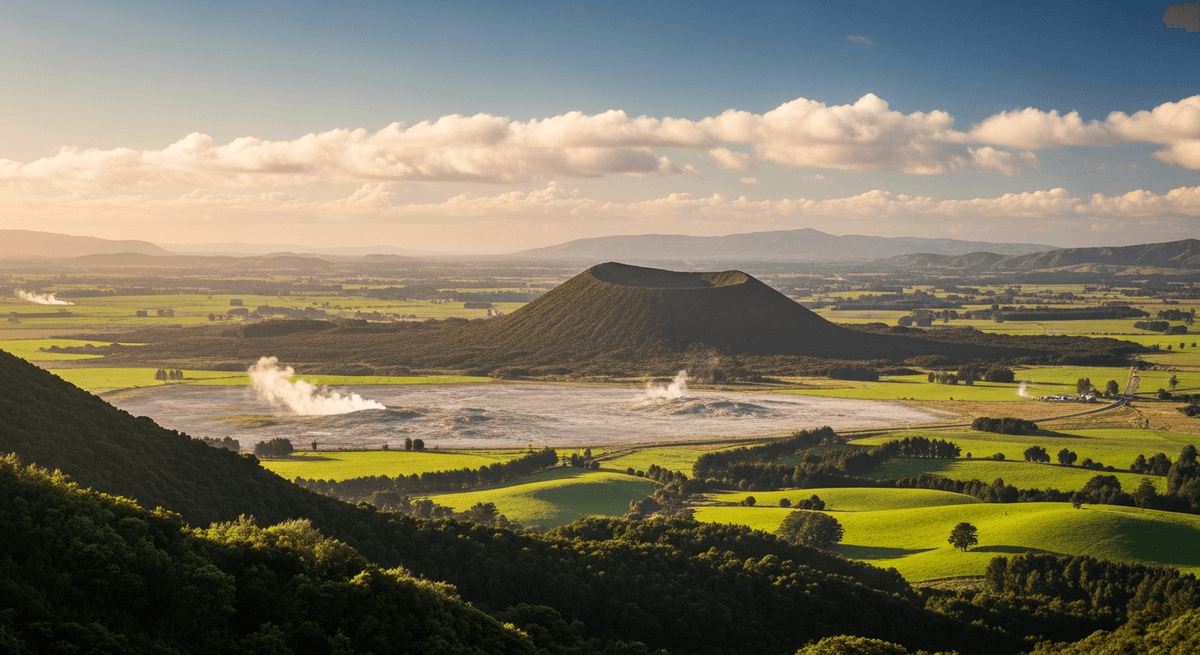
Rotorua announces itself through olfactory means well before visual confirmation, the sulphur pervading the town producing exactly one reaction from first time visitors and the resigned equanimity of long term residents who have recalibrated their expectations regarding atmospheric fragrance. The landscape justifies this aromatic adjustment: Wai O-Tapu Thermal Wonderland contains geological features that operate like nature's own theme park, complete with reliable scheduling.
The Lady Knox Geyser erupts at 10:15am daily with the punctuality that geysers rarely manage, assisted by a small soap addition that reduces surface tension and triggers the eruption. The Champagne Pool maintains a temperature of 75 degrees Celsius while its edges sparkle with orange arsenic and antimony deposits that create a natural artwork worthy of the finest galleries. The Artist's Palette presents a series of silica terraces in colours that earn the description "otherworldly" without the usual tourism industry hyperbole.
Te Puia, Rotorua's premier geothermal park and Maori cultural centre, combines geological wonders with cultural education in a way that honours both elements properly. The facility showcases traditional Maori arts, crafts, and performance while providing access to geysers, mud pools, and native kiwi birds in a nocturnal house. Rotorua's restaurant scene reflects the region's cultural diversity, with hangi (traditional earth oven) dining experiences offering authentic Maori cuisine alongside excellent international options. The city provides accommodation ranging from luxury spa resorts that utilise natural hot springs to budget friendly motels, all united by the common challenge of that distinctive sulphurous perfume.
Lake Taupo's Volcanic Grandeur
Plan this route with GPSSquad
AI powered itineraries, expense splitting, and group coordination in one app.
Start Planning FreeLake Taupo, 80 kilometres south of Rotorua, occupies the caldera of a supervolcano that erupted 26,500 years ago with sufficient force to affect the climate of Rome and China, a reminder that New Zealand's geological foundations operate on a scale that puts most human endeavours in proper perspective. The lake stretches clear and cold and trout filled across a surface area larger than Singapore, surrounded by mountains that frame the water like a postcard designed by someone with excellent taste.
Huka Falls demonstrates the Waikato River's commitment to dramatic effect, compressing the river's entire volume through a 15 metre wide channel before dropping 11 metres in a display of aquatic power that impresses entirely through being genuine rather than manufactured. The falls produce a thunderous roar and a mist that creates rainbow displays in suitable lighting conditions, while the walking tracks provide viewing platforms that showcase the falls from multiple angles.
Lake Taupo's recreational opportunities include trout fishing (licences required but easily obtained), scenic cruises to Maori rock carvings accessible only by water, and skydiving operations that capitalise on the region's spectacular views and generally excellent weather. The town of Taupo offers excellent dining focused on local trout and lamb, while accommodation ranges from luxury lakefront resorts to comfortable motels with lake views. The thermal hot springs scattered around the lake provide natural relaxation opportunities, including free soaking pools along the lakefront that require only the discovery of their somewhat hidden locations.
Wellington's Cultural Sophistication
Wellington occupies the southern tip of the North Island with the confidence of a capital city that knows its cultural weight, maintaining a cafe and restaurant scene that operates at a density and quality that a city of 215,000 has no reasonable right to sustain. The compact downtown area clusters around a harbour that provides both scenic beauty and protection from the winds that have earned Wellington its nickname as the "Windy City," though the gusts often feel more enthusiastic atmospheric participation than mere weather.
The Museum of New Zealand Te Papa Tongarewa stands as the country's cultural flagship, offering free admission to world class exhibitions that cover New Zealand's natural history, cultural heritage, and contemporary art scene. The museum's earthquake simulator and colossal squid exhibit provide uniquely New Zealand experiences, while the Maori cultural exhibitions present the country's indigenous heritage with the respect and depth it deserves. The Wellington waterfront, recently redeveloped with pedestrian and cycling paths, connects the central business district to Oriental Bay's beaches and provides harbour views that justify extended strolling.
Cuba Street represents Wellington's bohemian heart, lined with vintage shops, independent bookstores, and cafes that take coffee seriously enough to inspire respectful attention. The city's restaurant scene punches well above its weight class, featuring establishments that showcase New Zealand's exceptional produce with international techniques and local innovation. Accommodation options cluster around the harbour and central business district, from luxury hotels with harbour views to boutique establishments in converted heritage buildings that offer character along with comfort.
Crossing to the South Island
The Interislander ferry from Wellington to Picton requires three hours and 20 minutes to traverse Cook Strait, delivering passengers through the Marlborough Sounds in a journey that serves as scenic transition between islands rather than mere transportation. The ferry crossing provides opportunities to spot dolphins, seals, and various seabird species, while the approach to Picton reveals the South Island's mountainous character and the intricate waterways of the Sounds.
Picton functions as the gateway to the South Island, a compact port town surrounded by forested hills and sheltered bays that provide immediate evidence of the South Island's more dramatic topography. The town offers several accommodation options and restaurants specialising in green lipped mussels and other Marlborough seafood, while serving as the starting point for exploration of the wider Marlborough region. Ferry reservations require advance booking, particularly during peak season, and vehicle passengers should arrive at least one hour before departure to navigate the boarding process smoothly.
Marlborough Wine Country Excellence
The Marlborough region stretches inland from Picton through valleys that have achieved international recognition for Sauvignon Blanc production, creating a wine country that combines serious viticulture with stunning alpine scenery. The region's unique climate, characterised by warm days and cool nights, produces wines with the clarity and intensity that have established New Zealand as a significant player in international wine markets.
Cloudy Bay, Brancott Estate, and Villa Maria represent the region's most internationally recognised producers, offering cellar door tastings that showcase not only Sauvignon Blanc but also excellent Pinot Noir, Chardonnay, and Riesling. The wine trail connecting major producers winds through landscapes that shift from river valleys to mountain foothills, providing scenic drives between tastings that justify the designated driver arrangement. Many wineries offer restaurant facilities featuring local produce paired with their wines, creating dining experiences that celebrate the region's agricultural excellence.
Blenheim serves as the region's commercial centre, offering accommodation from luxury vineyard lodges to comfortable motels, plus restaurants that specialise in matching local wines with regional ingredients. The Saturday farmers market showcases Marlborough's diverse agricultural output, including not only grapes but also olive oil, artisanal cheeses, and fresh produce. Wine tour operators provide structured tastings for those preferring professional guidance, while self drive options allow more flexible exploration of the region's numerous smaller boutique producers.
Practical Planning Considerations
The optimal timing for this New Zealand road trip itinerary falls during shoulder seasons: September through November or February through April, when weather remains pleasant but tourist numbers decline to manageable levels. Summer brings peak season crowding that can transform serene locations into busy thoroughfares, while winter closes certain mountain passes and reduces daylight hours significantly.
Budget planning should accommodate approximately $150 to $200 per day for two people sharing accommodation, including mid range hotels, restaurant meals, fuel, and attraction entry fees. Budget conscious travellers can reduce costs through camping and self catering, while luxury seekers should expect premium pricing for high end accommodations and experiences, particularly in Queenstown and luxury vineyard lodges.
Essential packing includes layers suitable for variable weather conditions, as New Zealand's climate can change rapidly with altitude and coastal proximity. Rain gear proves essential regardless of season, while sturdy walking shoes accommodate the numerous hiking opportunities. Sun protection requires serious attention, as New Zealand's clear air and reduced ozone layer create conditions where sunburn occurs more quickly than many visitors expect.
Vehicle rental provides the flexibility essential for this itinerary, with compact cars suitable for most routes though larger vehicles offer additional comfort for longer driving days. International driving permits are required for most visitors, while familiarity with left side driving and New Zealand road rules ensures safe navigation. Accommodation reservations become essential during peak season, while shoulder season travel allows more spontaneous booking patterns.
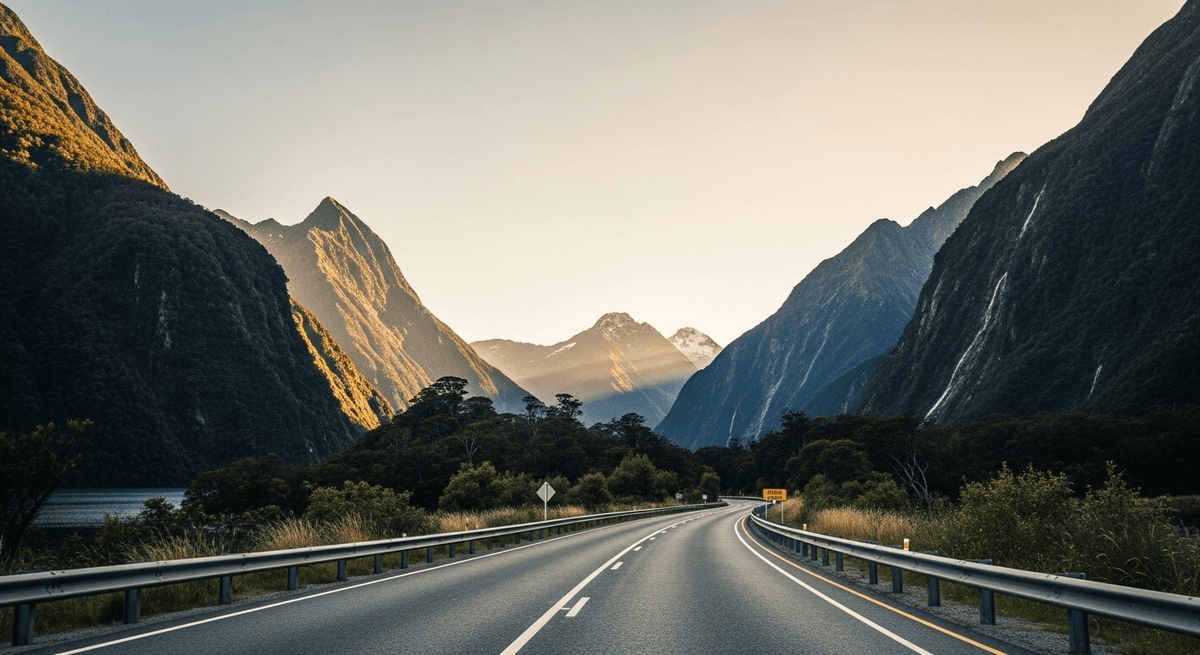
This New Zealand road trip itinerary balances comprehensive exploration with realistic timeframes, ensuring that each destination receives adequate attention while maintaining reasonable driving distances. The route connects the country's essential experiences, from geothermal wonders to alpine landscapes, creating memories that justify both the planning investment and the considerable distance travelled. The journey from Auckland to Wellington through the North Island sets the foundation, while the South Island portion culminates in experiences like the drive to Milford Sound that define New Zealand's reputation for natural grandeur. Plan this trip on GPSSquad.